Diamond Certificates (GIA, IGI, HRD)
What is a diamond certificate?
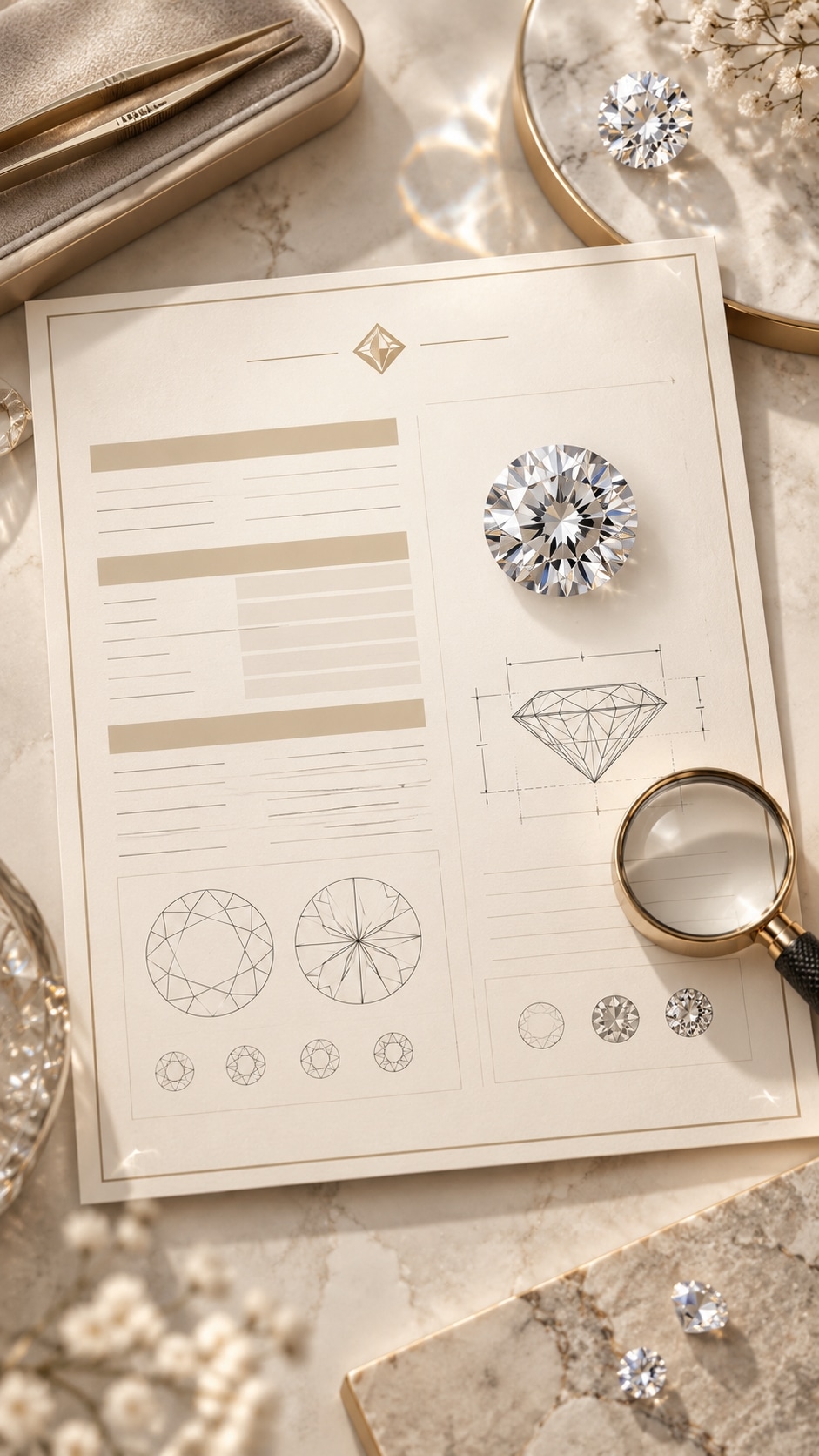
A diamond certificate, also known as a gemological report, is a document issued by an independent laboratory after the stone has been examined. It describes the diamond’s main characteristics according to standardized criteria, including carat weight, color, clarity, cut quality, proportions, symmetry and polish.
The certificate does not directly determine the diamond’s value, but it provides an objective basis for understanding its quality and comparing different stones. Depending on the laboratory, the report may also mention inclusions, detected treatments, whether the diamond is natural or synthetic, and a report number that can be checked online.
Most recognized certificates: GIA, HRD and IGI
To know the quality of a diamond without being a professional, it is necessary to have the information described in the certificate. The certificate is indispensable as a guarantor, protecting you from arbitrariness, protecting you from ignorance and therefore from possible deception, because a price is derived from it.
It goes without saying that a certificate is only of value if it is recognized in the profession. In our diamond catalog, we exclusively offer diamonds accompanied by a certificate of authenticity and quality issued by one of the 3 most prestigious and recognized laboratories worldwide: GIA, HRD and IGI. In our article which criteria of quality to privilege for your diamond, we help you to identify the criteria which correspond to you best.
Discover our catalog of certified diamonds
Online Certified Diamonds Catalog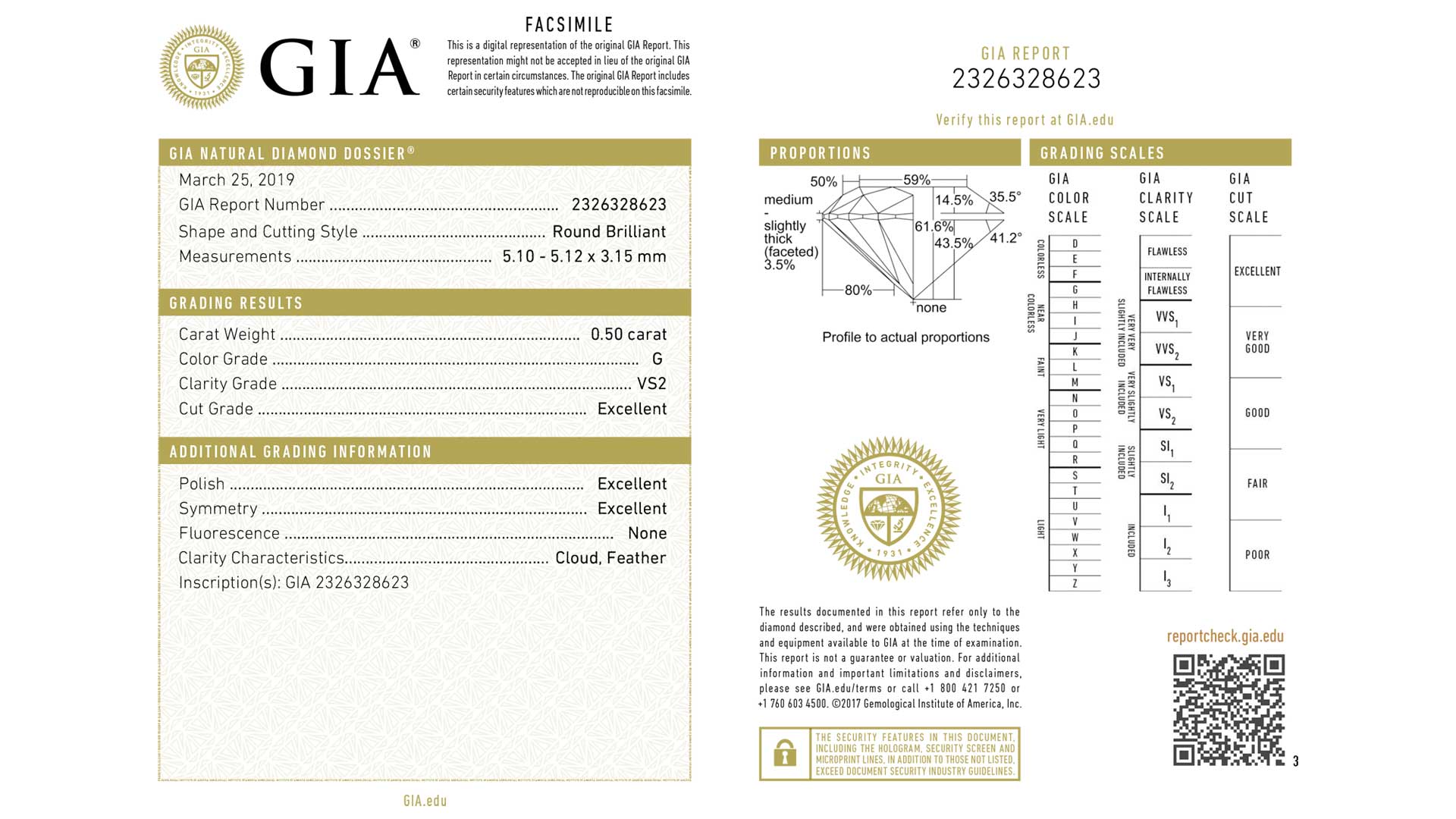
GIA Certificate
The GIA, or Gemological Institute of America, is one of the best-known gemological laboratories in the world. Its grading report provides a detailed assessment of a diamond’s characteristics, including carat weight, color, clarity, cut, proportions, symmetry and polish.
A GIA certificate also includes a unique report number that can be used to verify the diamond’s information directly with the laboratory. Depending on the type of report, it may also include a clarity characteristics plot and additional comments about the stone.
HRD Certificate
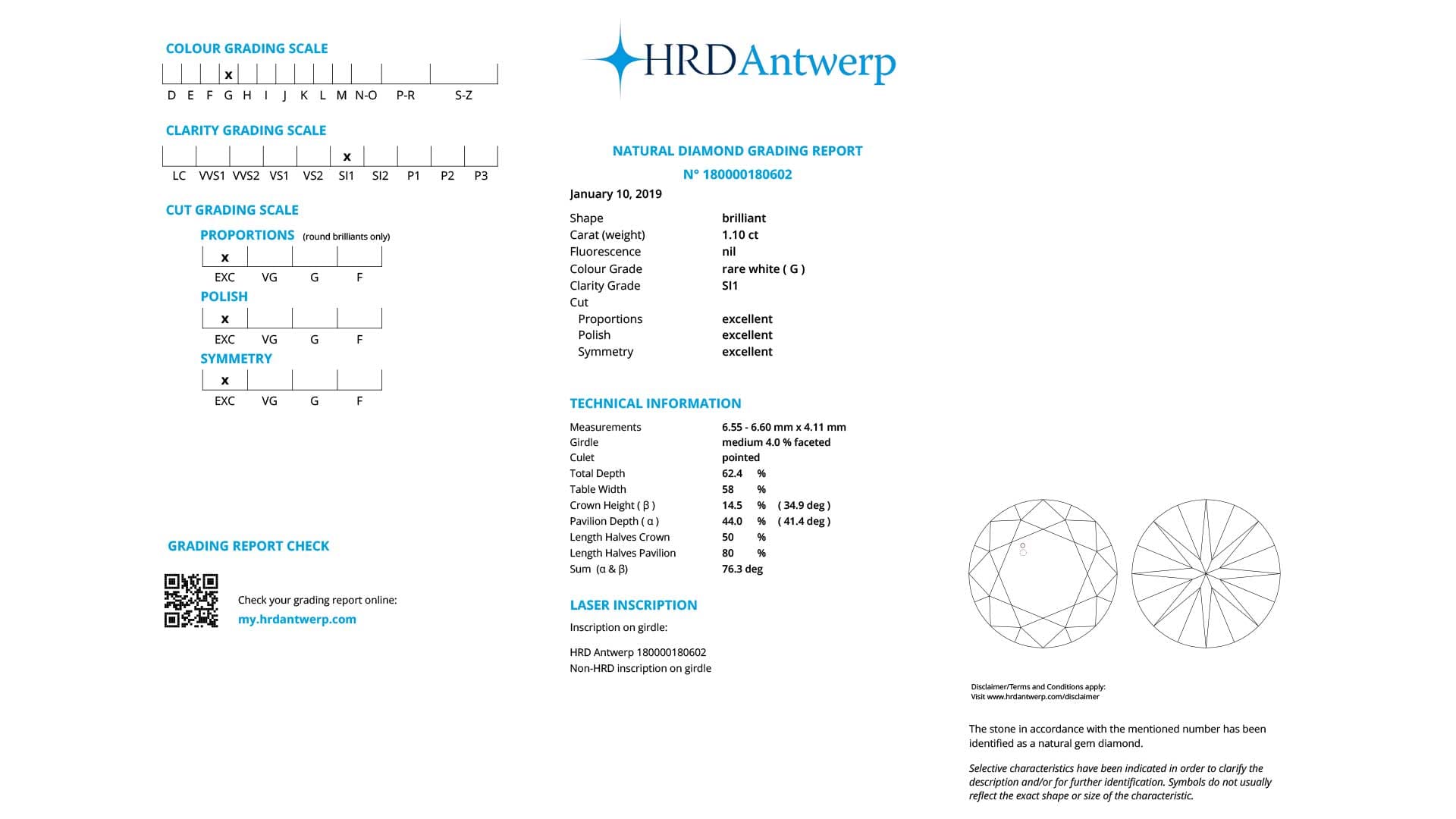
HRD, or Hoge Raad voor Diamant, is a gemological laboratory based in Antwerp, one of the world’s major diamond centers. It issues detailed grading reports that identify and assess the main characteristics of a diamond.
An HRD certificate includes information such as carat weight, color, clarity, cut, proportions, fluorescence, polish and symmetry. Each report also has a unique identification number that can be used to verify its authenticity.
IGI Certificate
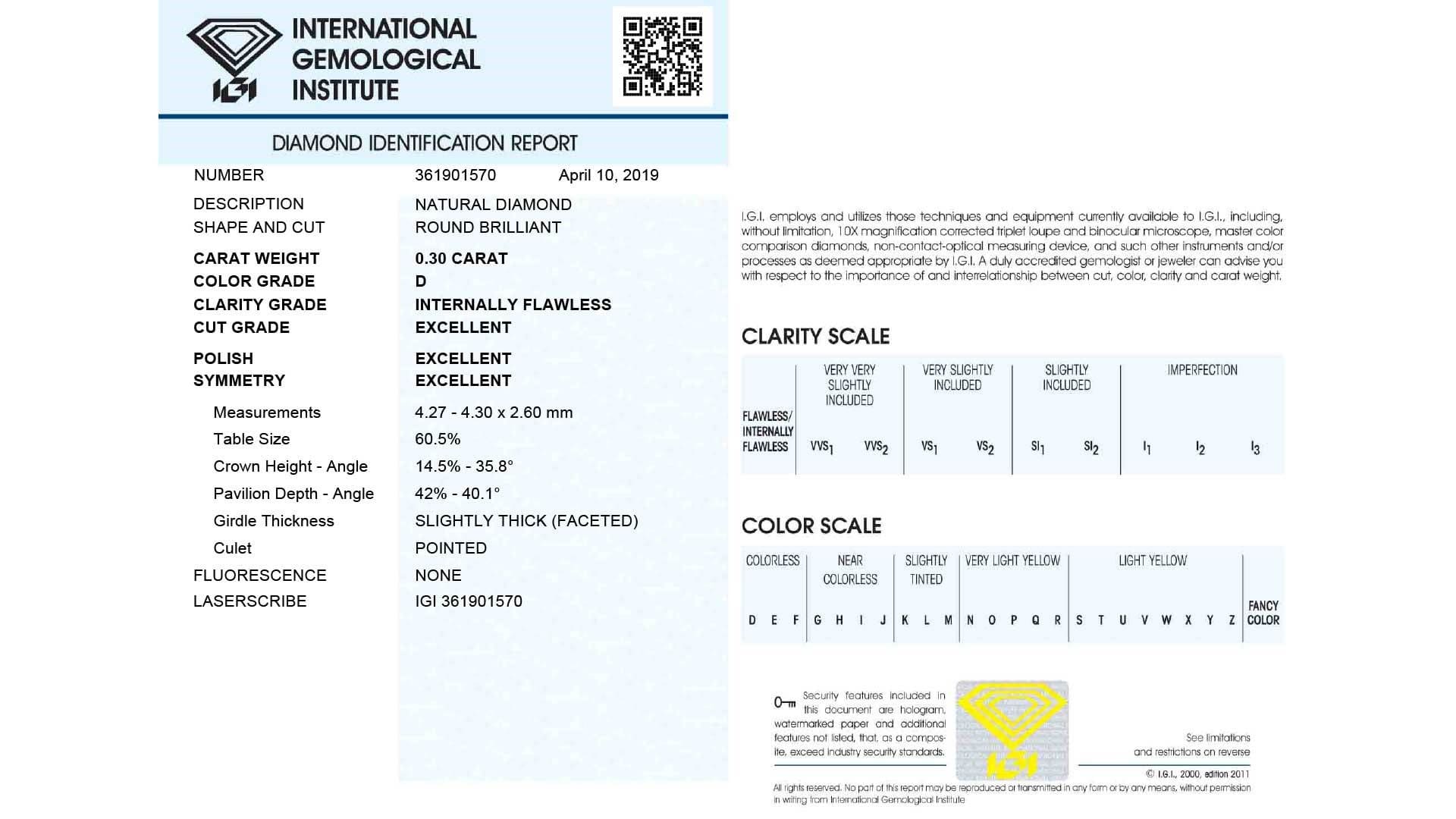
IGI, or International Gemological Institute, is an international laboratory specializing in the analysis and certification of diamonds and other gemstones. Its gemological reports describe the main characteristics used to identify and assess a diamond.
An IGI certificate typically includes carat weight, color, clarity, cut, proportions, symmetry and polish. IGI grades both natural and laboratory-grown diamonds, clearly stating the nature of the diamond on its report.
How to read a diamond certificate?
A diamond certificate contains the main information used to identify the stone and assess its quality. The layout may vary depending on the laboratory — GIA, HRD or IGI — but the same key sections are generally included.
Report number
Each certificate has a unique report number used to identify the grading report and, depending on the laboratory, verify its authenticity online.
Shape and measurements
The certificate indicates the diamond’s shape as well as its exact measurements in millimeters. These dimensions help assess its proportions and overall appearance.
Carat weight
The weight of the diamond is expressed in carats. One carat is equal to 0.20 grams.
Color
The color grade indicates how colorless the diamond is. For white diamonds, laboratories use grading scales to classify the stone precisely.
Clarity
The clarity grade assesses the presence of internal inclusions and external characteristics, as well as their size, number and position.
Cut, polish and symmetry
The report may also indicate the quality of the diamond’s cut, polish and symmetry. These elements play an important role in its visual appearance and ability to reflect light.
Clarity characteristics
Some certificates include a diagram showing the location of the main inclusions or identifying characteristics observed in the diamond.
Additional comments
The laboratory may also add comments regarding treatments, specific characteristics or other information useful for identifying the stone.
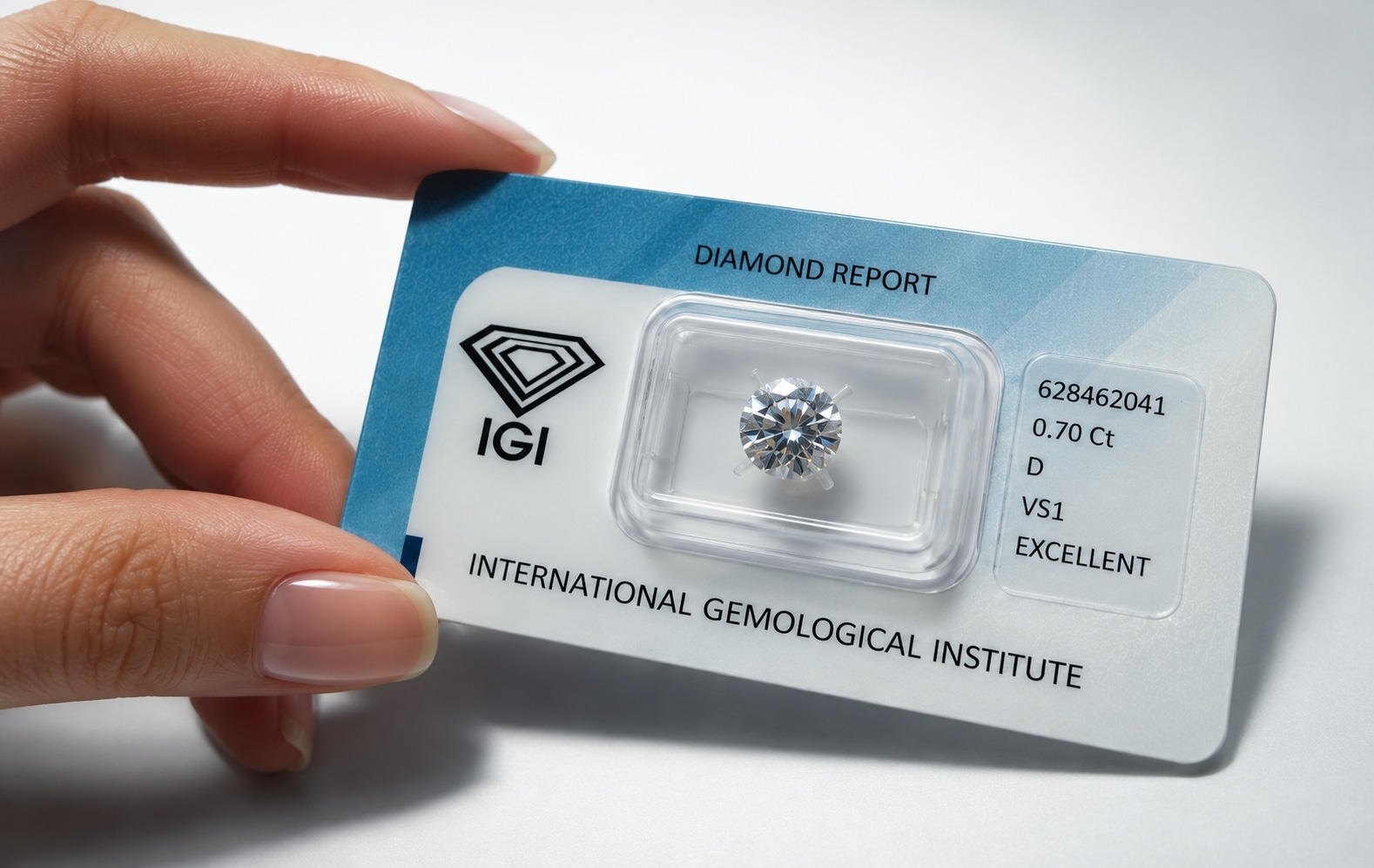
The certificate from the GIA laboratory delivers the diamonds under folded and not sealed but with the laser inscription of the certificate number on the roundel. This inscription can be made on request for IGI or HRD certified diamonds as well, offering the possibility of a double guarantee of conformity (seal and laser inscription).
Beware of certificates of convenience such as AIG, EGL... ( not recognized in the profession ) proposed with low prices. It is necessary to compare what is comparable...
All our high quality diamonds from 0.30 carat are delivered with the numbered GIA, HRD or IGI certificate, and can be delivered under HRD or IGI seal by the laboratory in a rigid plastic pouch. The certificate retains its importance even if the seal has been opened. A competent jeweler can easily establish the match between the diamond and the certificate. Most professionals even prefer the open certificate so that they can freely examine the diamond and appreciate its "life".
Discover our certified diamonds
See our selection now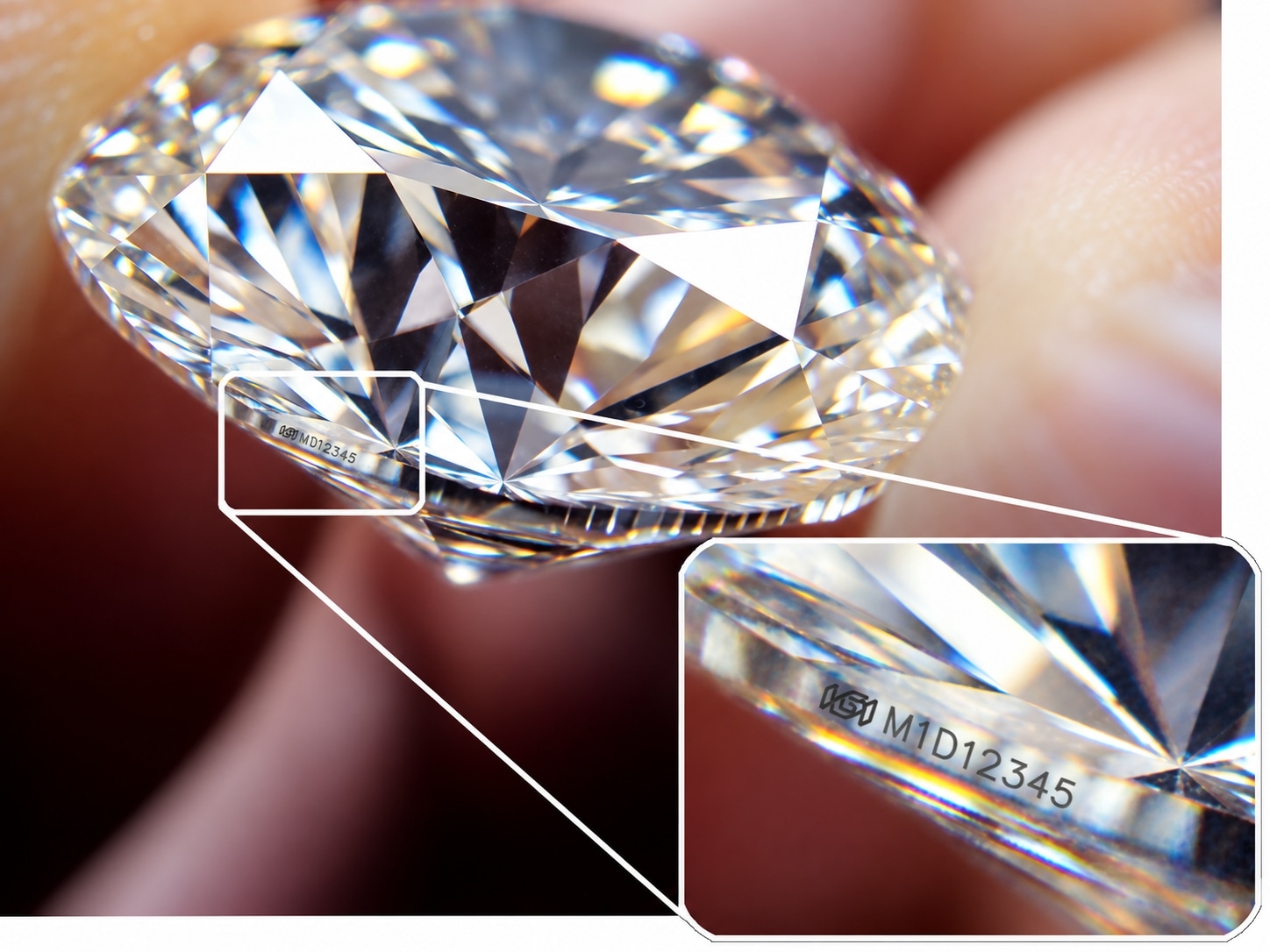
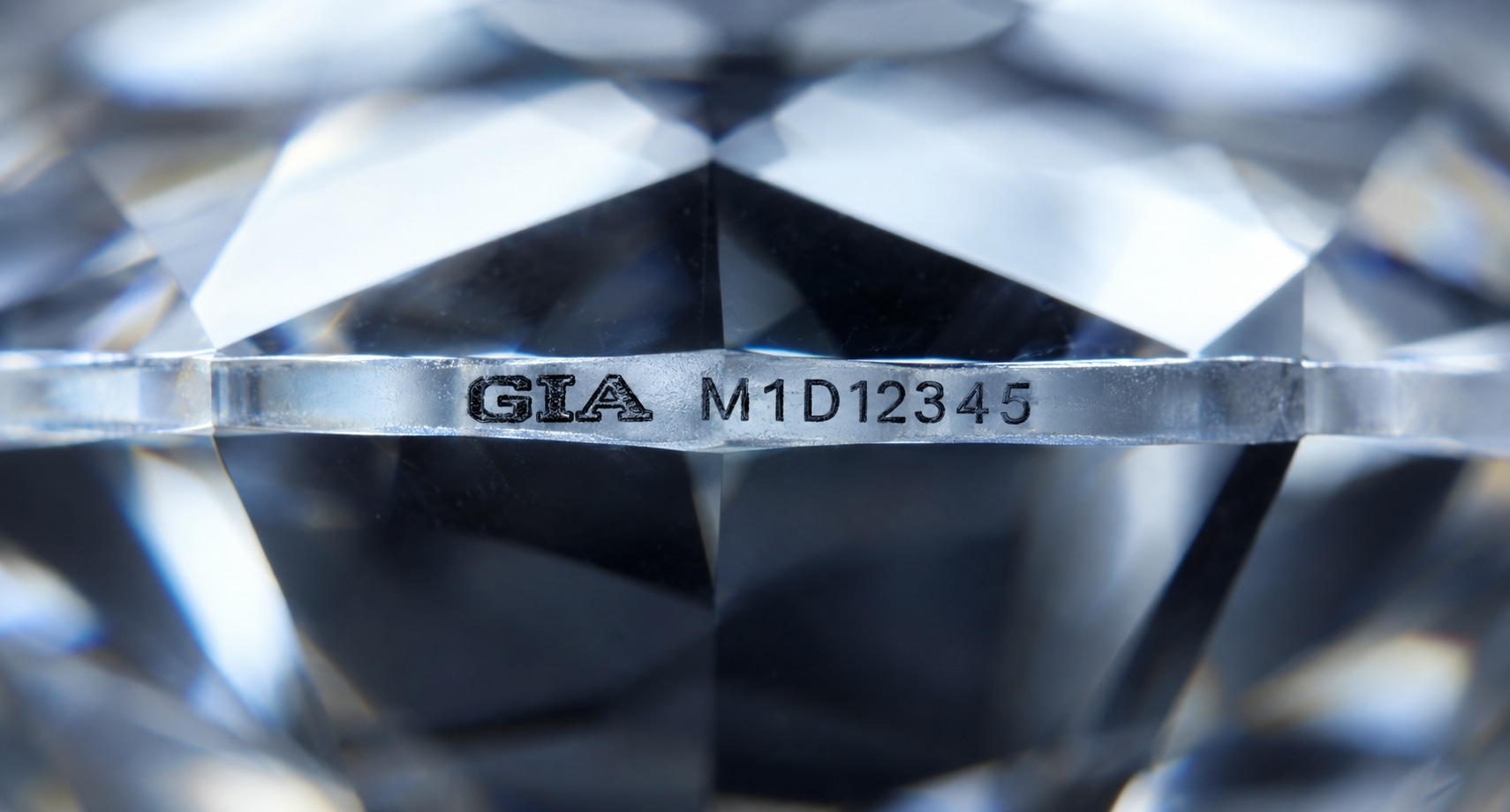
Laser marking (inscription of the diamond certificate number)
Micro laser inscription of the certificate number on the diamond roundel with the GIA laboratory logo.
Also called "marking" or "branding" in English.
Laboratories such as IGI and HRD offer this micro inscription as an option (invisible without the use of a magnifying glass).
The inscription is very small (to preserve the purity of the stone) that it is very difficult to read even with a 10X magnifying glass. For the neophyte, the laboratory seal is a more visible proof of the concordance between the quality of the sealed diamond and its certificate. Purists are against this inscription for very pure stones, IF and VVS - the laser inscription was invented for high value stones for identification purposes in case of theft. Note that a thief can easily remove the inscription by having a diamond cutter put a small facet on the roundel.
What are the differences between GIA, HRD and IGI certificates?
GIA, HRD and IGI assess diamonds using comparable criteria, including carat weight, color, clarity, cut, polish and symmetry. However, their report formats, internal grading methods and evaluation standards may differ slightly.
Similar grading systems, but not always identical
The same diamond may sometimes receive a slightly different grade depending on the laboratory that examines it. These differences can concern color, clarity or certain aspects of the cut.
Different certificate formats
Each laboratory uses its own gemological report format. The way information is presented, the diagrams, additional comments and verification systems may therefore vary.
International recognition
GIA, HRD and IGI are all widely recognized in the diamond industry. When comparing several stones, it is important to consider both the laboratory, the characteristics listed on the certificate and the actual appearance of the diamond.
Compare diamonds using equivalent criteria
To compare two diamonds properly, it is better to consider the certificate as a whole rather than focusing on a single grade. Carat weight, color, clarity, cut quality, proportions and fluorescence can all influence the appearance and value of the stone.
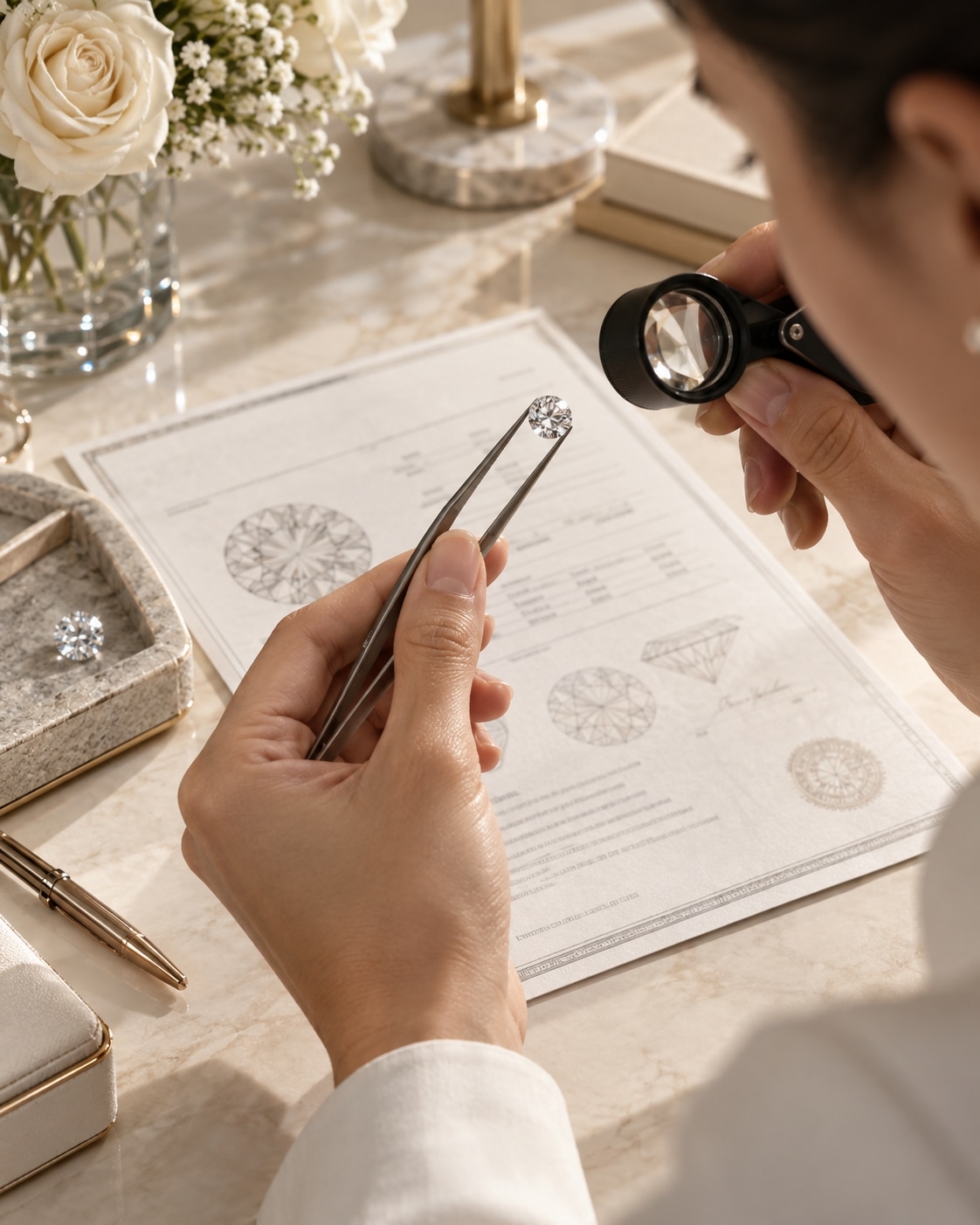
How to verify the authenticity of a diamond certificate
A diamond certificate can generally be verified directly with the laboratory that issued it. GIA, HRD and IGI each provide an online verification service that allows you to retrieve the main report details using its unique report number.
Check the report number
The certificate number should match the information recorded by the laboratory, including carat weight, color, clarity, measurements and other characteristics of the diamond.
Check the laser inscription
When the report number is laser-inscribed on the diamond’s girdle, it can be viewed using a loupe or microscope. This inscription helps confirm that the stone corresponds to the certificate that accompanies it.
Compare the diamond’s characteristics
The report number alone is not enough. It is also advisable to compare the main characteristics listed on the certificate with the diamond itself, particularly its weight, measurements and, where possible, its identifying inclusions.
Use the laboratory’s official website
For this verification, it is best to use the official GIA, HRD or IGI verification service. This allows you to confirm that the report number exists and that the information displayed matches the certificate presented.
Diamonds < 0.30 carat
For smaller brilliants (< 0.30 carat), certification is not done systematically (expensive compared to the price of small brilliants). Since the price of small brilliants remains moderate, we recommend that you "put the price on it": to choose quality (F color, VS clarity and especially a good size), the market is "flooded" with poor quality and badly cut stones, cheap, but the diamonds lose their brilliance.
Sealed diamond or open certificate: what is the difference?
A diamond may be presented sealed with its certificate or offered loose with a separate gemological report. In both cases, the key point is to make sure the stone clearly matches the certificate that accompanies it.
The sealed diamond
A sealed diamond is kept in a closed package linked to its grading report. This can provide additional reassurance at the time of purchase, particularly when the seal helps show that the stone has not been replaced since certification.
However, the sealed presentation limits direct examination of the diamond. It can be more difficult to assess its brilliance, proportions and certain visual characteristics before buying.
The diamond with an open certificate
A diamond presented outside a sealed package can be handled and examined more easily under a loupe and in different lighting conditions. This makes it easier to appreciate its actual appearance before making a decision.
When the report number is laser-inscribed on the diamond’s girdle, this inscription can also help confirm that the stone matches the gemological report that accompanies it.
What to check before buying
Whatever the presentation, confidence should mainly come from the consistency between the diamond and its certificate. The report number, measurements, carat weight, clarity characteristics and, where applicable, the laser inscription should match the information recorded by the laboratory.
De Hantsetters, diamonteers since 1888
Customer service at your service, provided by diamond dealers
All our diamonds are independently certified by 3 world-renowed organisations



Want to talk to a diamonteer ?
Contact us now