Diamonds
An exceptional 37-carat bicolored diamond discovered in Botswana: a legendary gemstone in the making
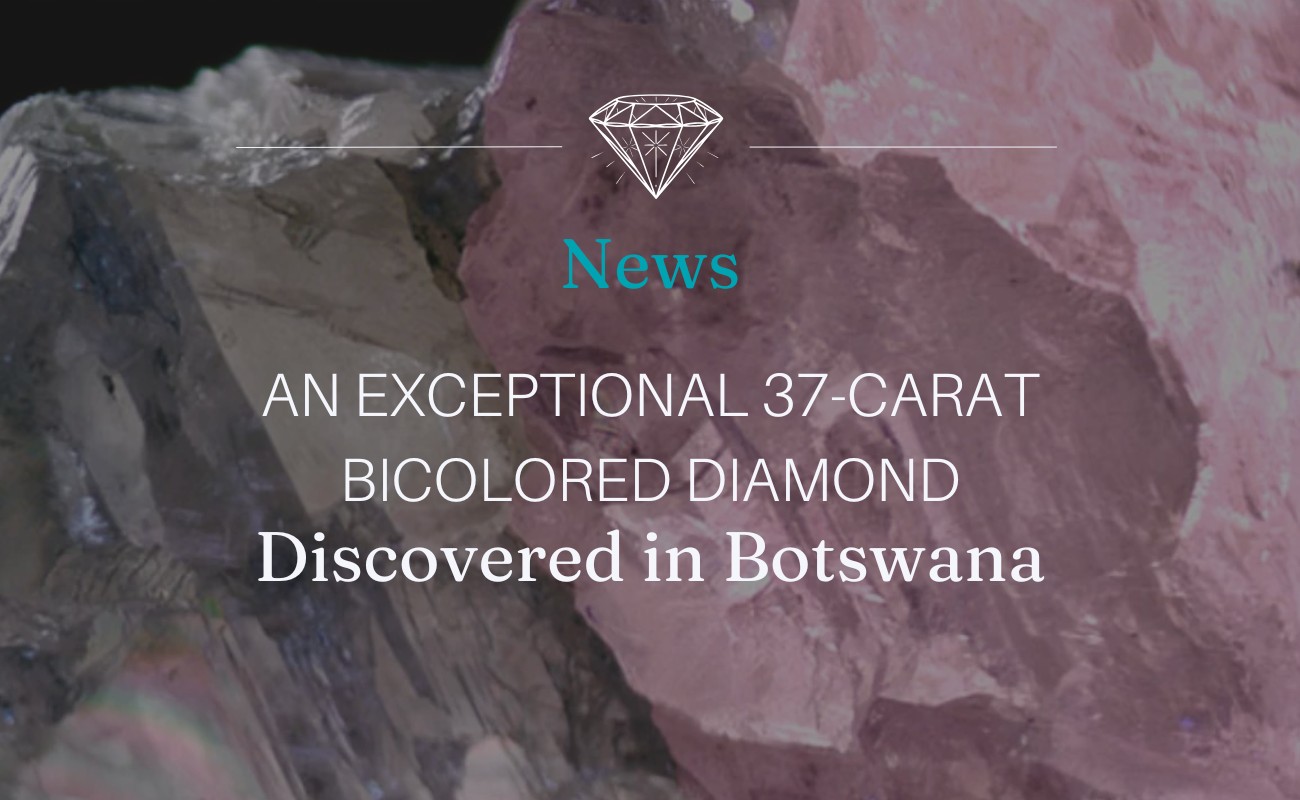
Gemologists around the world are holding their breath: in the heart of the famous Karowe mine in Botswana, an absolutely unique rough diamond has just been unearthed.
Weighing 37.41 carats, this stone displays a feature that is exceptionally rare in the history of gemology: it is bicolored, composed of one pink half and one completely colorless half, separated by a sharp and natural boundary.
A discovery that could well become one of the most fascinating gemstones of recent decades.
GIA analysis: world-class expertise
It is in this context that researchers at the GIA (Gemological Institute of America) recently analyzed this exceptional rough diamond.
The GIA is the world’s leading laboratory for the study and certification of diamonds, and it is also the institution that certifies most of the stones we offer to our clients.
Their work provides valuable insight into:
- the extreme geological conditions that allowed this stone to form,
- the diamond’s internal structure,
- the mechanisms behind the sharp separation between the two colors.
A dual diamond: between intense pink and pure transparency
Discovering a stone of nearly 40 carats with two perfectly distinct zones is truly exceptional.
The diamond features:
- a pink zone, caused by extreme deformation of the crystal lattice,
- a colorless zone, perfectly pure,
- a sharp, almost graphic boundary between the two parts,
- impressive dimensions: 24.3 × 16 × 14.5 mm.
This specimen is classified as Type IIa, one of the purest forms of diamond in the world, devoid of nitrogen — an absolute rarity.
A natural phenomenon still shrouded in mystery
The pink color in diamonds is not caused by impurities but by plastic deformation of the carbon lattice, resulting from extreme geological pressures and transformations deep within the Earth.
This diamond likely underwent two growth phases:
- The pink part probably formed in an environment subjected to significant stress.
- The colorless part continued to grow under more stable conditions.
A rough stone that could be worth a fortune
For now, the stone has not been cut.
Its final value will therefore depend on:
- the quality of the future cut,
- the possibility of preserving both colors within a single polished diamond,
- or the decision to create several separate stones, depending on the cutter’s strategy.
But one thing is certain: the luxury and high jewelry market is already watching closely.
In 2017, in Hong Kong, a 59.6-carat diamond — the “Pink Star” — was sold for 71.2 million US dollars.
What, then, of a bicolored stone twice that size with unique gemological characteristics?
We may well be looking at a future legendary gemstone, custom-cut for a prestigious jewelry house.
A discovery that could inspire jewelers around the world
Beyond its scientific value, this bicolored diamond opens extraordinary creative possibilities.
In high jewelry, it could inspire:
- bicolored pieces combining pink stones and white diamonds,
- asymmetrical designs playing with duality,
- collections inspired by Botswana, a land of gemstones,
- creations in which the stone “tells” its exceptional geological story.
For a brand wishing to communicate on authenticity, rarity, or natural beauty, this discovery is a true opportunity.
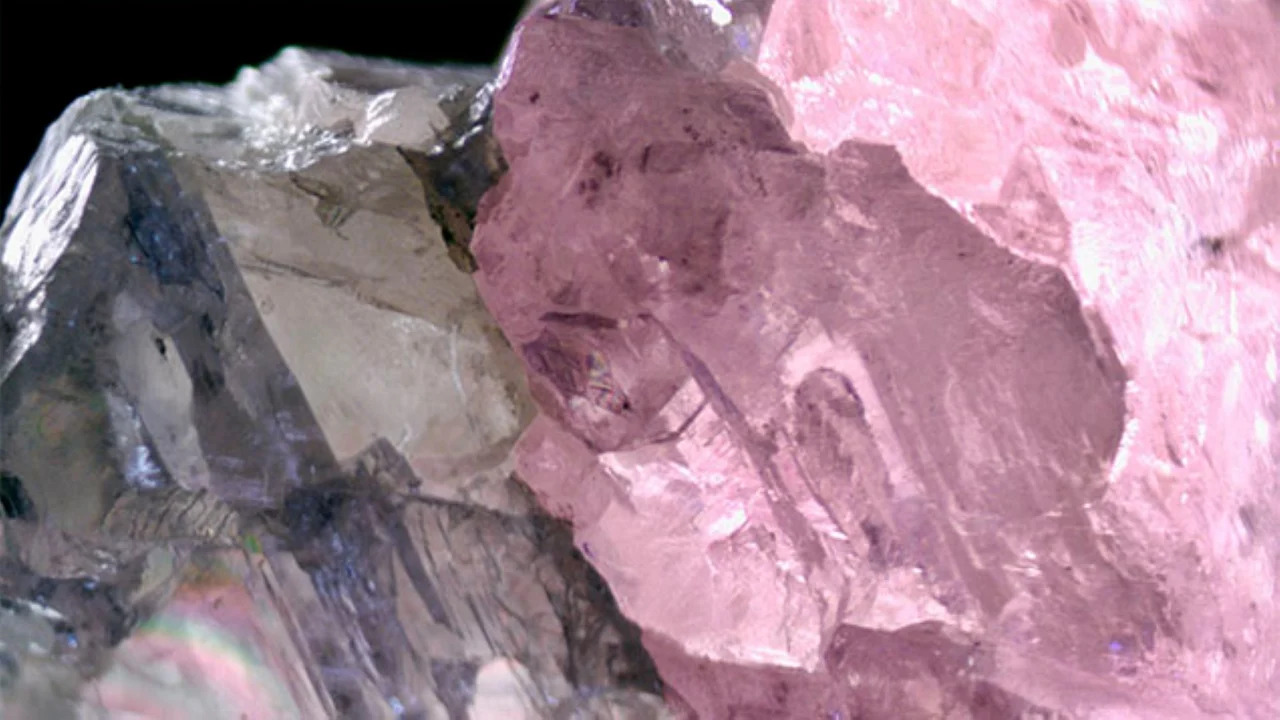
Photo credit: Wanling Tan / GIA
A geological treasure and a symbol of the Earth
The Karowe mine is already known for having produced some of the world’s largest diamonds, including the Lesedi La Rona (1,109 carats).
With this new bicolored discovery, it further confirms its status as an exceptional geological site.
This diamond embodies:
- the power of the Earth,
- the patience of geological time,
- the unpredictable beauty of the mineral world.
A rough stone reminding us that nature can create masterpieces impossible to imitate.
A rare stone that could enter history
This 37-carat bicolored diamond is not just rare: it is unique.
Scientifically, geologically, and aesthetically, it meets every criterion of an exceptional gem.
Whether it becomes a legendary solitaire, a high jewelry showpiece, or a set of refined diamonds, this stone is poised to enter history.
Botswana, once again, confirms its status as a land of mineral marvels.