Diamonds
10 incredible diamond discoveries in Botswana that changed the world
Botswana has produced some of the largest and rarest natural diamonds in modern history, becoming an undisputed epicenter of major diamond discoveries. These extraordinary stones reflect the geological wealth of this Southern African country as well as its role as a global leader in ethical mining and innovative technologies. In fact, around 80% of the value of rough diamonds extracted in Botswana remains in the country, directly supporting the local economy. In just a few decades, Botswana has moved from being one of the world’s poorest nations to the leading diamond producer by value, transforming its gemstone resources into shared prosperity through responsible management.
We invite you to revisit ten exceptional diamond discoveries made in Botswana over the past decade — stones so rare and remarkable that they have fascinated gemologists, collectors, and jewelry enthusiasts around the world.
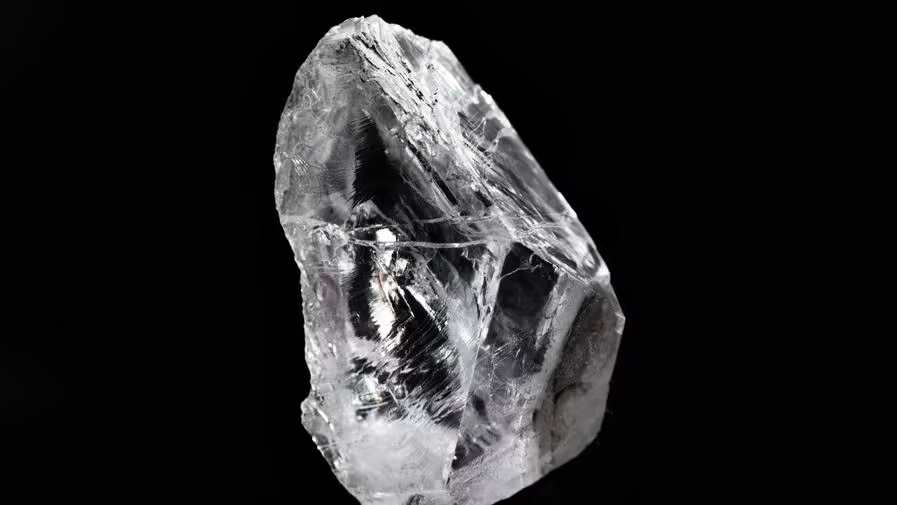
1. Lesedi La Rona (2015) – 1,109 carats, a legendary discovery
Lesedi La Rona, a 1,109-carat rough diamond discovered in 2015.
Discovered in 2015 at the Karowe mine, this massive 1,109-carat rough diamond entered history as the second-largest gem-quality diamond ever found, surpassed only by the legendary 3,106-carat Cullinan. Named Lesedi La Rona — meaning “our light” in Setswana — the stone was acquired in 2017 by British jeweler Laurence Graff for a record $53 million. After extensive analysis, the crystal was laser-cut despite the risks, producing a 302.37-carat diamond of exceptional color and clarity. The resulting Graff Lesedi La Rona became the largest square emerald-cut diamond ever certified by the GIA, confirming the historic nature of the discovery.
2. The Constellation diamond (2015) – a record sale at $63 million
Nicknamed Constellation, this 813-carat rough diamond discovered in November 2015 at Karowe ranks among the most spectacular finds of recent years. It was purchased the following year by Nemesis, in partnership with jeweler de Grisogono, for $63.1 million, setting a world record at the time for a rough diamond sale (around $78,000 per carat).
© De Grisogono
3. Sewelô (2020) – 1,758 carats, an extraordinary black diamond
In 2020, luxury house Louis Vuitton — a newcomer to the diamond sector — stood out by taking part in the discovery of two giant diamonds in Botswana, in partnership with mining company Lucara and HB Antwerp. The first of these treasures is the Sewelô, an almost entirely black rough diamond weighing 1,758 carats. Meaning “rare find” in Setswana, it became the largest diamond unearthed in over a century and the second largest ever discovered.
4. The Sethunya diamond (2020) – 549 carats, acquired by Louis Vuitton
In February 2020, shortly before the pandemic, sorter Maria Basupi made an unforgettable discovery at the Karowe mine: a diamond crystal of extraordinary size and purity. Named Sethunya — “flower” in Setswana — this 549-carat stone is distinguished by exceptional clarity and brilliance, perfected over one to two billion years of geological formation. Nine months later, it was acquired by Louis Vuitton and joined the Parisian house’s prestigious collection.
5. A 998-carat rough diamond (2020) – an exceptional discovery
At the end of 2020, the Karowe mine made headlines again with the discovery of a colossal 998-carat rough diamond, then the fourth largest ever found worldwide. This success rewarded Lucara’s founders, who invested in innovative technologies designed specifically to recover very large gemstones.
6. A 1,098-carat diamond (2021) – third largest in the world
In 2021, an extraordinary discovery was made at a mine operated by Debswana: a 1,098-carat diamond of exceptional gem quality. It is the third largest gem-quality diamond ever recorded and the largest discovered since Debswana was founded in the 1970s. The company’s CEO described the stone as “rare and extraordinary,” highlighting its symbolic importance for Botswana.
7. A 470-carat light brown diamond (2021) – a Karowe rarity
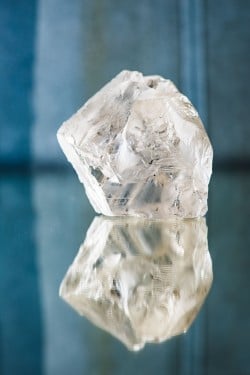
That same year, Karowe confirmed its reputation for recovering exceptional gems with the extraction of a 470-carat light brown rough diamond. It was later cut into several polished stones destined for high jewelry.
© Lucara
8. Eva Star (2023) – 1,080 carats, sold for $54 million
Discovered in 2023 at Karowe, the Eva Star is a 1,080-carat rough diamond belonging to the rare Type IIa category, meaning it is almost free of nitrogen impurities. In 2025, it was sold alongside the Sethunya diamond for a combined $54 million, once again demonstrating Botswana’s extraordinary geological wealth.
9. The Seriti diamond (2024) – 1,094 carats, currently being cut
In September 2024, a 1,094-carat rough diamond was discovered and named Seriti, meaning “aura” or “presence” in Setswana. At the time, it ranked as the sixth largest gem-quality diamond in the world and is now being studied and cut by master craftsmen at HB Antwerp.
10. A 2,488-carat diamond (2024) – one of the largest in history
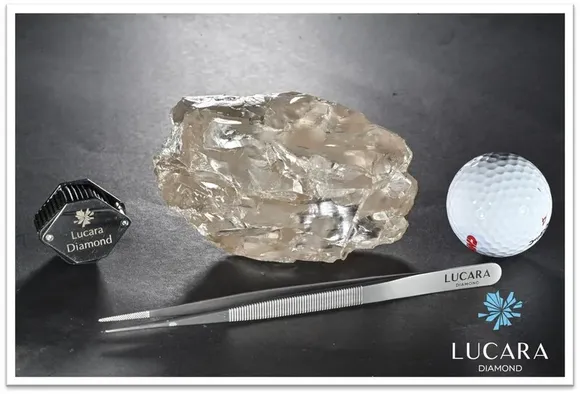
The 2,488-carat rough diamond discovered in 2024 is among the largest ever found.
Finally, late 2024 saw a monumental discovery: a 2,488-carat rough diamond extracted by Lucara, setting one of the great records in mining history. Immediately compared to the Cullinan, it became the second largest diamond ever discovered. Experts note that fewer than 30 diamonds over 500 carats have ever been found, making each discovery of this magnitude a historic event.
 © Lucara
The technology behind these discoveries
Botswana’s success is partly due to cutting-edge mining technologies such as X-ray transmission (XRT), which detects diamonds without crushing the ore, preserving large crystals and reducing environmental impact by lowering energy and water consumption.
The future of diamond discoveries in Botswana
As surface deposits gradually decline, Botswana’s diamond industry is moving underground. Lucara is currently leading a major expansion of the Karowe mine, aiming to extend operations until at least 2040. More than ever, new diamond discoveries remain crucial to Botswana’s sustainable development, funding infrastructure, healthcare, and education while reinforcing national pride in the responsible use of natural resources.
Source: naturaldiamonds.com