Diamonds
Azure Blue Diamond: History, Record and Christie's Auction

The Azure Blue Diamond has established itself as an exceptional collector's gemstone, standing at the crossroads of gemological prestige and the history of major auctions. Presented by Christie's, it attracted attention thanks to its impressive size, remarkable color, and potential to set a record within its category. Its name quickly became recognized in the world of colored diamonds, where every detail matters to discerning buyers.
This blue diamond fascinates not only because of its appearance. It also illustrates the extreme rarity of natural diamonds of this hue, the intense competition among collectors, and the importance of laboratory certification. Its journey at auction confirmed that the market for blue diamonds remains one of the most selective and closely followed in the world.
To understand the value of this gemstone, several aspects must be examined: the auction result, the science behind its color, its gemological characteristics, and the role played by Christie's in presenting historic lots. This perspective allows the Azure Blue to be positioned among the greatest names in high jewelry.
The Azure Blue Diamond at Auction: Record, Estimate, and Final Result
The sale of the Azure Blue diamond at Christie's attracted considerable attention because it was one of the largest fancy blue diamonds ever offered at auction. The estimate was based on its rarity, announced clarity, and remarkable size. In this type of sale, the condition of the stone, the provenance of the gemological report, and the reputation of Christie's play a decisive role.
The final result confirmed the market's strong interest in exceptional colored gemstones. When a diamond combines substantial size, intense color, and a carefully orchestrated sales story, it attracts fierce bidding. Christie's knows how to create an environment where the final price reflects both rarity and the symbolic prestige of the stone.
The lot was also compared with other gemstones offered during the same sale, including smaller but highly sought-after blue diamonds. This comparison is essential because it demonstrates that a record does not depend solely on carat weight, but also on color intensity, clarity, and market perception. At auction, even subtle differences can shift an estimate by several million dollars.
An Auction Closely Watched by Collectors
Collectors closely monitor this type of sale because each appearance of a natural blue diamond of this caliber is a rare event. Competition among international buyers creates significant tension, often driving prices higher. At Christie's, this phenomenon is particularly evident when the stone is presented as a historic specimen.
- Exceptional rarity of the gemstone
- Worldwide visibility of the Christie's auction
- Comparison with other diamonds offered during the sale
- Potential for a new record within its category
The result also depends on the profile of the buyers. Some seek a long-term heritage investment, while others desire a unique piece for a private collection. In every case, the Azure Blue demonstrated that a gemstone of this level transcends decorative value to become a prestigious asset.
Why Are Blue Diamonds So Rare?
The rarity of a natural blue diamond can be explained by its highly specific geological formation. The presence of boron within the crystal structure alters the way light is absorbed, giving the stone its blue hue. This phenomenon is extremely rare, making blue diamonds a category of their own within the world of natural diamonds.
Unlike more common gemstones, these diamonds are formed only under very specific geological conditions over millions of years. The low occurrence of boron, combined with the constraints of formation, makes this color exceptionally rare and highly desirable. This rarity justifies their status as collector's gemstones and their prominence in high jewelry auctions.
The market also values a gemstone's ability to maintain stable color and consistent brilliance. The deeper and more vivid the color appears, the more desirable the diamond becomes. This is why the world's most famous blue diamonds are often associated with spectacular auction results and extremely high expectations.
Where Does the Blue Color in a Diamond Come From?
The blue color appears when boron atoms become incorporated into the diamond's crystal structure. Their presence affects the way light is absorbed, creating shades of blue that vary depending on concentration and internal arrangement. This fascinating phenomenon transforms a transparent crystal into a highly expressive gemstone.
This mechanism also explains why not all blue diamonds exhibit the same intensity. Their hues can range from delicate to deep and spectacular depending on their internal structure. In the case of the Azure Blue, this intensity contributes significantly to its prestige and market value.
Color Grades: Fancy Blue and Fancy Vivid Blue
Gemological laboratories classify color according to a precise hierarchy. The grade Fancy Blue designates a diamond with a sufficiently strong blue color to be highly desirable, while Fancy Vivid Blue corresponds to an even stronger and rarer level of saturation. This distinction directly influences price, desirability, and collector interest.
The difference between Fancy Blue and Fancy Vivid Blue may seem subtle to the untrained eye, but it is decisive for experts. A Fancy Vivid Blue diamond generally displays a stronger visual presence and a richer saturation that captures more light. This characteristic often places a gemstone at the very top of its category.
- Fancy Blue: strong and highly desirable color
- Fancy Vivid Blue: superior saturation and stronger visual impact
- Consistency and homogeneity of color
- Direct influence on auction value
At auction, this grading becomes strategic. Christie's carefully highlights the exact color grade because it strongly influences market perception. A well-graded blue diamond is not simply beautiful: it becomes a benchmark for all colored diamond collections.
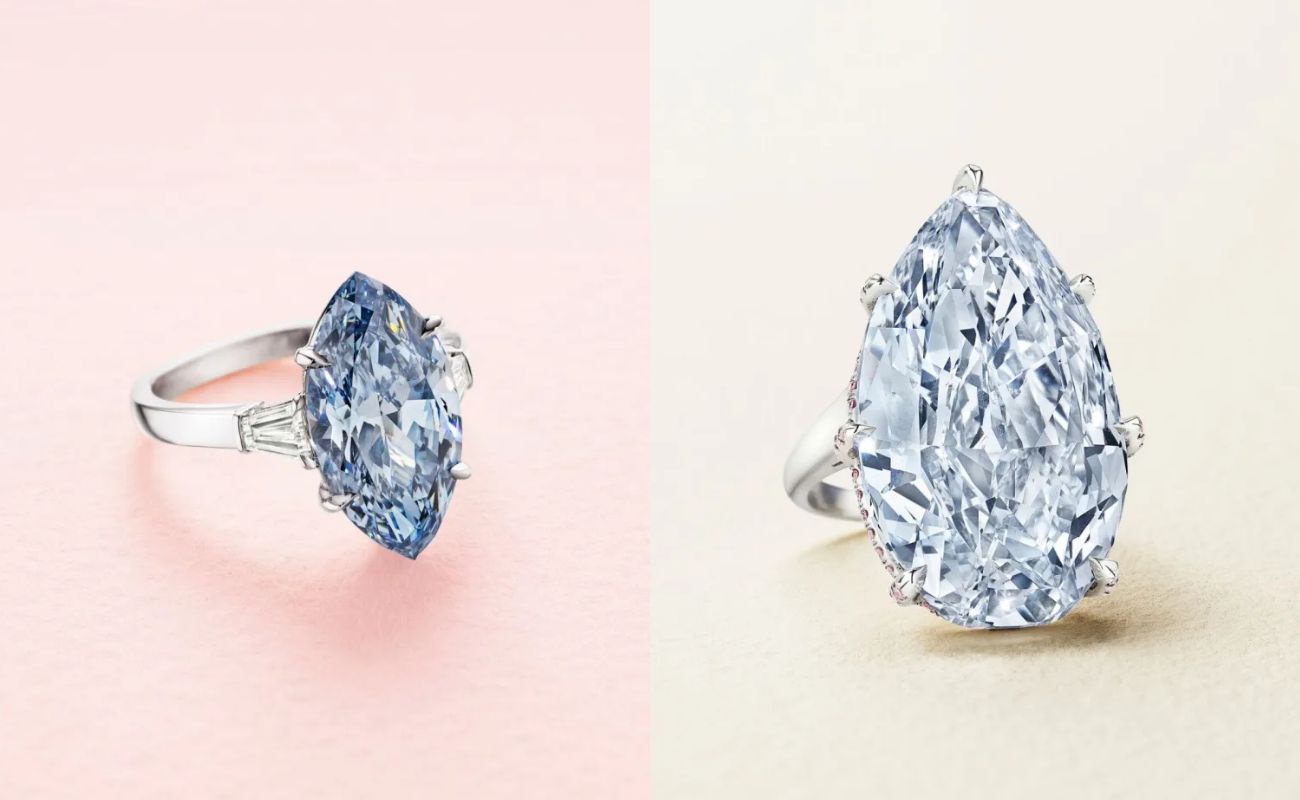
Photo credits - naturaldiamonds.com
Gemological Characteristics of the Azure Blue and Its Place Among the Great Blue Diamonds
The Azure Blue diamond stands out because of several highly desirable characteristics: substantial weight, exceptional cut quality, elegant shape, and remarkable clarity. Gemological descriptions frequently mention a pear shape, a cut appreciated for balancing brilliance with visual presence. The stone may also belong to the Type IIb classification, which is typical of natural blue diamonds containing boron.
Its clarity and finish further enhance its prestige. When a gem report describes a stone as potentially Internally Flawless, market interest immediately rises. Such a condition is rare, especially for a gemstone of this color, since large diamonds are generally more susceptible to inclusions.
Shape also matters. A harmonious cut allows light to move elegantly throughout the stone, enhancing its color. The Azure Blue therefore benefits from an ideal balance between presence, refinement, and aesthetic impact, making it highly desirable within high jewelry.
How Does the Azure Blue Compare with the World's Most Famous Blue Diamonds?
The market frequently compares the Azure Blue to legendary gemstones such as the Oppenheimer Blue, the Blue Moon of Josephine, the De Beers Blue, and the Hope Diamond. These references serve to evaluate prestige, rarity, and record-breaking potential. The Azure Blue belongs within this prestigious lineage while maintaining its own unique identity.
The comparison is not based solely on weight. It also concerns color saturation, cutting quality, clarity, and the prestige of sales held by Christie's or other leading auction houses. These elements allow collectors to position the stone within the history of great blue diamonds.
- Historic prestige associated with major colored diamonds
- Presence in international-level auctions
- Strong appeal for private collections
- Benchmark for future blue diamond sales
Certification and Authenticity of a Blue Diamond
GIA certification remains essential for confirming the color, clarity, and characteristics of an exceptional gemstone. Without a recognized report, properly evaluating value becomes difficult. In the case of a blue diamond, authenticity and grading accuracy are fundamental for securing a purchase and reassuring the market.
Christie's typically highlights these aspects because they reinforce the credibility of the sale. Collectors want confirmation that the diamond is natural, that its color has been verified by a laboratory, and that its gemological characteristics match the published description.
For buyers, documentation is just as important as visible beauty. A diamond of this value is assessed according to its brilliance, color, and technical reports. This combination transforms a beautiful gemstone into a rare and highly coveted asset.
What Is the Price of a Blue Diamond?
The price of a blue diamond depends on several factors: color intensity, clarity, cut, carat weight, shape, and the reputation of the auction house. A rare specimen can achieve extremely high prices, sometimes reaching several million dollars depending on its quality and auction competition.
Price also reflects global desirability. When a gemstone attracts international collectors, bidding can escalate rapidly. Christie's takes advantage of this interest by creating sales that emphasize rarity rather than simply material value.
This explains why prestigious blue diamonds extend far beyond traditional jewelry. They become collectible works of art, symbols of rarity, and benchmarks for future auctions.
How Is the Azure Blue Mounted as Jewelry?
The mounting of the Azure Blue into a ring or high jewelry piece is designed to showcase the gemstone without competing with it. Platinum is often preferred because of its understated elegance and ability to highlight the blue color. Side diamonds or subtle touches of red may enhance contrast, but the overall design must remain discreet so the central stone dominates.
This type of setting follows a precise aesthetic philosophy. The mounting serves as a frame rather than a rival. It protects the gemstone while emphasizing its brilliance and preserving its status as the centerpiece. In high jewelry, this balance is essential for maintaining the visual impact of the Azure Blue diamond.
The final result is generally intended for exceptional occasions and museum-quality or private collection presentation. The setting is therefore much more than a simple support: it contributes to the overall interpretation of the stone, its perceived value, and its integration within a prestigious collection.
Why Do Collectors Seek Blue Diamonds?
Collectors seek blue diamonds because of their rarity, beauty, and appreciation potential. These gemstones combine several highly coveted qualities: exceptional color, unique geological history, and a strong presence in major auctions. Their appeal often extends beyond impulse purchases to form part of a long-term heritage strategy.
Global demand remains strong, particularly for certified and well-documented stones. Christie's and other major auction houses play a crucial role in this dynamic by providing sales services that reassure buyers and create international competition.
Collectors also appreciate the uniqueness of every stone. No two natural blue diamonds are exactly alike. This individuality fuels the search for new specimens and reinforces the appeal of exceptional lots.
The Azure Blue perfectly embodies this logic. Combining record-breaking potential, geological rarity, certification, and prestigious presentation by Christie's, it possesses all the attributes of a major gemstone. Its place in the history of blue diamonds stems as much from its beauty as from its ability to inspire competition.
Beyond the auction itself, it reminds us that the rarest colored gemstones are also objects of science, desire, and collecting. For enthusiasts and investors alike, the Azure Blue remains a remarkable reference within the market for exceptional diamonds.
```