Diamonds
Hope Diamond: History, Curse and Secrets of the Blue Diamond
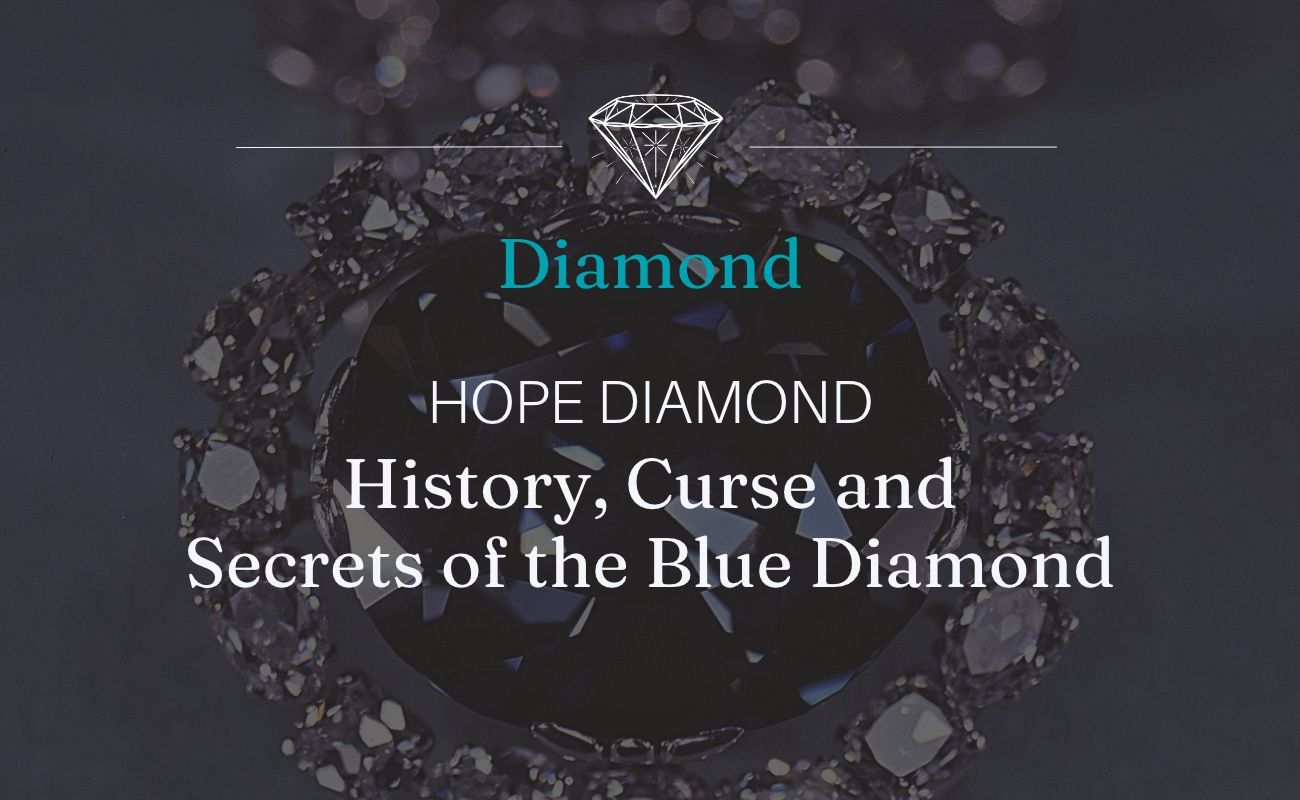
Among the world's most famous diamonds, the Hope Diamond holds a truly special place. Weighing 45.52 carats, with its deep blue color and a history connected to the kings of France, the French Revolution and some of America's wealthiest families, it has fascinated people for more than three centuries.
But the Hope Diamond also owes its fame to a mysterious reputation: that of a cursed diamond, believed to have brought misfortune to several of its owners.
Behind this legend, however, lies an equally fascinating reality. The Hope Diamond possesses exceptional gemological characteristics, including a color caused by the presence of boron within its crystal structure and an extraordinary ability to emit red light after exposure to ultraviolet radiation.
Here is the remarkable story of this natural blue diamond, now preserved at the Smithsonian National Museum of Natural History in Washington, D.C.
The Hope Diamond: key facts and figures
- Current weight: 45.52 carats.
- Color: Fancy Deep grayish blue, a deep blue with grayish undertones.
- Clarity: VS1.
- Cut: antique cushion brilliant.
- Diamond type: IIb.
- Origin: India, probably the Golconda diamond-producing region.
- First documented royal acquisition: Louis XIV, in 1669.
- Current location: Smithsonian Institution, Washington, D.C., United States.
A blue diamond from the mines of India
The story of the Hope Diamond begins in India, at a time when the country was virtually the only known source of diamonds in international trade.
Its origin is generally associated with the historic mines of the Golconda region, particularly the Kollur mine. However, this provenance remains probable rather than conclusively established.
During the 17th century, the French merchant and traveler Jean-Baptiste Tavernier brought an exceptional blue diamond back from the East. Its weight is now estimated at approximately 115 metric carats.
The stone had an irregular, almost triangular shape and a color that Tavernier described as violet, a term that could also refer to certain shades of blue at the time.
In 1669, the diamond entered the collection of King Louis XIV of France. This acquisition marked the beginning of its extraordinary history among the French Crown Jewels.
Louis XIV and the creation of the French Blue Diamond
The Sun King did not wish to preserve the diamond in its original form. He commissioned a new cut to enhance the color and brilliance of this remarkable gemstone.
The transformation was supervised by Jean Pittan, a jeweler at the royal court. After approximately two years of work, the diamond acquired a shape resembling a heart, and its weight was reduced to around 69 carats.
It then became the famous French Blue Diamond, also known as the Bleu de France or the Great Blue Diamond of the French Crown.
Its cut featured an extraordinary detail: certain facets were arranged so that, when the diamond was mounted against a gold backing, the light created an effect resembling a golden sun at the center of the blue stone.
This creation perfectly reflected Louis XIV's appreciation for royal symbolism and spectacular gemstones.
In 1749, during the reign of Louis XV, the diamond was incorporated into a prestigious insignia of the Order of the Golden Fleece, alongside other gemstones from the royal collections.
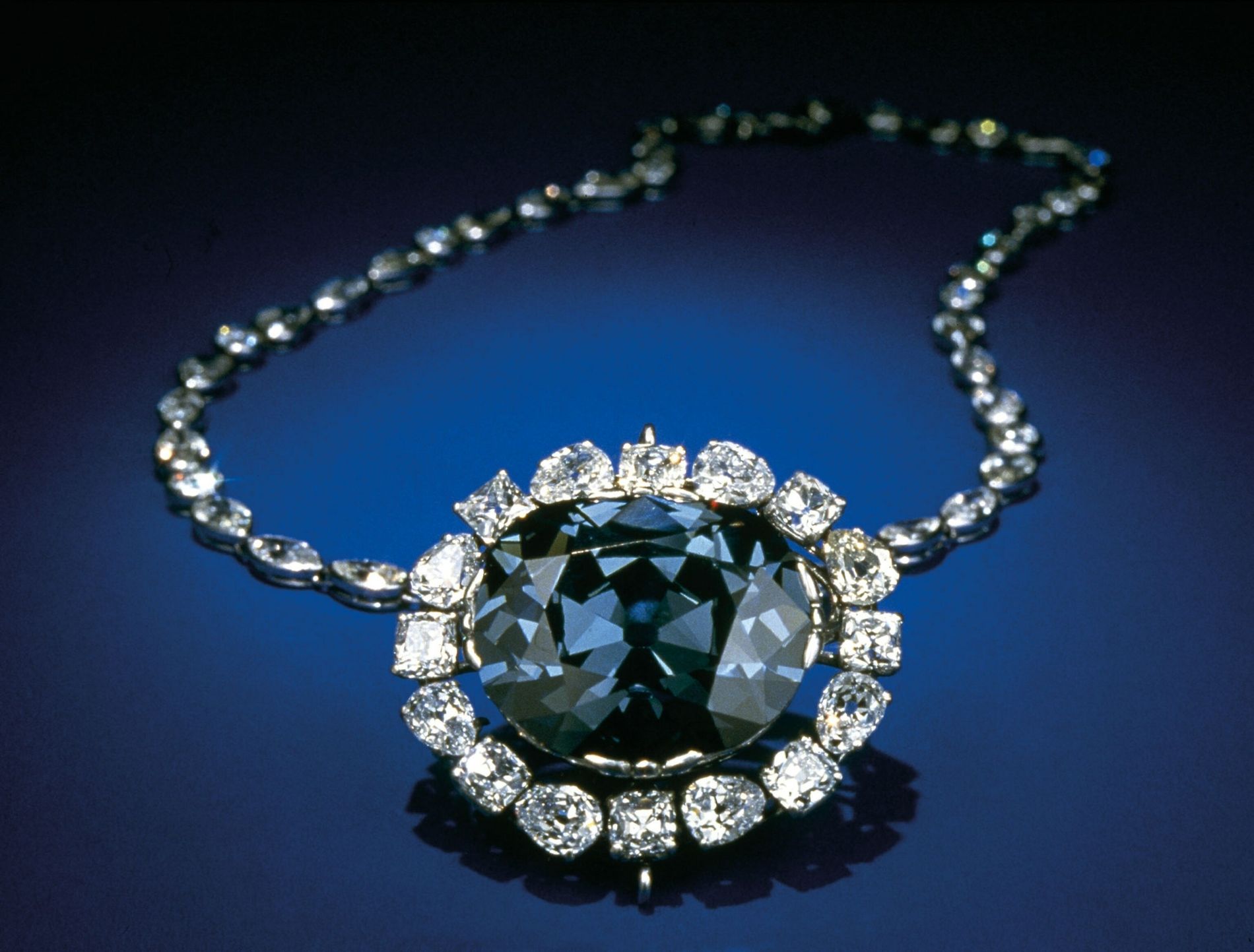
Photo credit: Smithsonian Institution
1792: the diamond is stolen during the French Revolution
The fate of the French Blue Diamond took a dramatic turn during the French Revolution.
In September 1792, the French Crown Jewels were targeted in a spectacular robbery at the Garde-Meuble national in Paris. Several historic gemstones disappeared, including the magnificent blue diamond that had belonged to Louis XIV.
Unlike some of the other jewels that were eventually recovered, the French Blue seemed to have vanished without a trace.
For nearly twenty years, no confirmed record of the stone appeared in any known historical documents.
In 1812, a blue diamond weighing approximately 45.5 carats was recorded in London, in the possession of diamond merchant Daniel Eliason.
Its exceptional color and certain distinctive features of its cut raised a question that would fascinate historians for generations: could this diamond be the missing French Blue, recut to conceal its identity after the 1792 robbery?
How scientists uncovered the Hope Diamond's true identity
For many years, the connection between the Hope Diamond and the French Blue was based primarily on historical hypotheses and gemological similarities.
However, advances in imaging technology and computer modeling would considerably strengthen this theory.
In the early 2000s, researchers examined the dimensions, proportions and facets of the Hope Diamond to determine whether it could have been cut from the missing French Blue.
The rediscovery of a historic lead cast of the French Blue Diamond, preserved in the collections of the Muséum national d'Histoire naturelle in Paris, provided particularly valuable information.
Using digital scanning and three-dimensional reconstruction, researchers demonstrated that the Hope Diamond could indeed fit within the original volume of the French Blue.
These findings provided major scientific evidence supporting the theory that both diamonds originated from the same stone.
Today, the Hope Diamond is therefore considered very likely to be the recut descendant of the famous jewel that once belonged to Louis XIV.
Why is it called the Hope Diamond?
After reappearing on the British diamond market during the 19th century, the gemstone entered the collection of Henry Philip Hope, a wealthy banker and collector of precious stones.
The diamond was listed in the catalog of his collection published in 1839.
It is from this British collector that the gemstone takes the name by which it is now known throughout the world: the Hope Diamond.
The diamond remained in the Hope family for several generations before being sold in the early 20th century.
It subsequently passed through the hands of various international dealers and collectors, including prominent figures in the gemstone trade.
Pierre Cartier and Evalyn Walsh McLean: the diamond enters American high society
In the early 1910s, the famous jeweler Pierre Cartier sought to sell the Hope Diamond to an exceptionally wealthy clientele.
He presented it, among others, to Evalyn Walsh McLean, an American heiress known for her love of spectacular jewelry.
The young woman was captivated by the gemstone but was less enthusiastic about its original setting. Cartier therefore had the diamond remounted to give it a more contemporary appearance.
The diamond was eventually purchased by Evalyn Walsh McLean and her husband, becoming one of the most remarkable jewels in Washington high society.
McLean loved wearing her jewelry at grand social events, and the Hope Diamond quickly became her signature piece.
However, several family tragedies would mark her life. These unfortunate events helped reinforce the unsettling reputation associated with the diamond.
Is the Hope Diamond really cursed?
The supposed curse of the Hope Diamond is undoubtedly one of the most famous legends in the history of jewelry.
According to certain accounts, people who owned the gemstone were struck by disasters, accidents, financial ruin or premature deaths.
One legend claims that the diamond was stolen from a sacred statue in India and that a curse subsequently followed its successive owners.
However, historical research has found no reliable evidence to support this story.
Smithsonian historians have pointed out that the legend of the curse developed primarily in the early 20th century, when the popular press and certain gemstone dealers began highlighting the misfortunes supposedly associated with the stone.
Pierre Cartier himself may have contributed to maintaining this mysterious reputation as part of his efforts to sell the diamond.
Although the tragic experiences of certain owners were real, there is no evidence establishing a connection between these events and ownership of the gemstone.
The Hope Diamond therefore illustrates how myths can gradually transform a precious stone into a legendary figure in its own right.
Why is the Hope Diamond blue?
Beyond the legends, the most remarkable feature of the Hope Diamond remains its natural color.
Unlike yellow diamonds, whose color is mainly associated with the presence of nitrogen, natural blue diamonds generally owe their distinctive hue to the presence of boron within their crystal structure.
Boron is a chemical element that can replace certain carbon atoms within the diamond crystal. These changes influence the way the diamond absorbs light, producing a blue coloration.
Diamonds containing boron generally belong to the gemological category of type IIb diamonds.
These diamonds are extremely rare among natural diamonds.
The Hope Diamond stands out for its deep color, classified by the Gemological Institute of America (GIA) as Fancy Deep grayish blue, meaning a deep blue with a grayish component.
This classification belongs to the world of natural colored diamonds, where hue, saturation and color intensity play a decisive role in gemological evaluation.
A diamond that glows red under ultraviolet light
The Hope Diamond possesses another spectacular property that remained mysterious for many years: its ability to emit an orange-red glow after exposure to certain types of ultraviolet radiation.
This phenomenon is known as phosphorescence.
It should not be confused with fluorescence. In the case of phosphorescence, the gemstone can continue emitting light for a period of time after the exciting light source has been switched off.
When exposed to short-wave ultraviolet radiation, the Hope Diamond can display intense orange-red phosphorescence, visible for several tens of seconds and sometimes approaching one minute.
This property is particularly rare and represents one of the diamond's most fascinating scientific signatures.
GIA researchers have studied this phenomenon and identified two main light-emission bands, at approximately 500 nanometers and 660 nanometers.
The relative intensity of these bands contributes to the color of the phosphorescence observed.
The presence of boron plays a major role in these mechanisms, although certain details of red phosphorescence remain the subject of scientific research.
An exceptional gemstone studied by the GIA
The Hope Diamond has been examined on several occasions by gemologists, including specialists from the Gemological Institute of America.
These studies have helped document its physical and optical characteristics, as well as certain features of its crystal structure.
Its exact weight is 45.52 carats, its cut is described as a cushion brilliant, and its clarity grade is VS1.
This clarity grade indicates that the diamond contains very small inclusions that are difficult to observe under ten-times magnification.
The combination of its impressive size, highly distinctive natural color and classification as a type IIb diamond makes it an exceptional subject for scientific study.
The Hope Diamond also provides valuable insights into the formation mechanisms of blue diamonds and their optical properties.
For gemologists, it therefore represents far more than a historic jewel: it is a genuine scientific reference.
Harry Winston donates the Hope Diamond to the Smithsonian
Following the death of Evalyn Walsh McLean in 1947, her jewelry collection was eventually acquired in 1949 by the famous American diamond dealer Harry Winston.
The Hope Diamond subsequently appeared in several exhibitions organized by the jeweler, notably as part of his traveling collection of precious gemstones.
In 1958, Harry Winston decided to donate the diamond to the Smithsonian Institution in Washington, D.C.
The way this donation was carried out is almost as surprising as the gemstone's history itself: the diamond was sent by registered mail in an ordinary parcel, with insurance coverage of one million dollars.
On November 10, 1958, the donation was officially presented to the Smithsonian.
Since then, the Hope Diamond has become one of the most iconic treasures in America's national collections.
Where can you see the Hope Diamond today?
The Hope Diamond is currently displayed at the National Museum of Natural History, part of the Smithsonian Institution in Washington, D.C.
It is exhibited in the National Gem and Mineral Collection, where it attracts a large number of visitors every year.
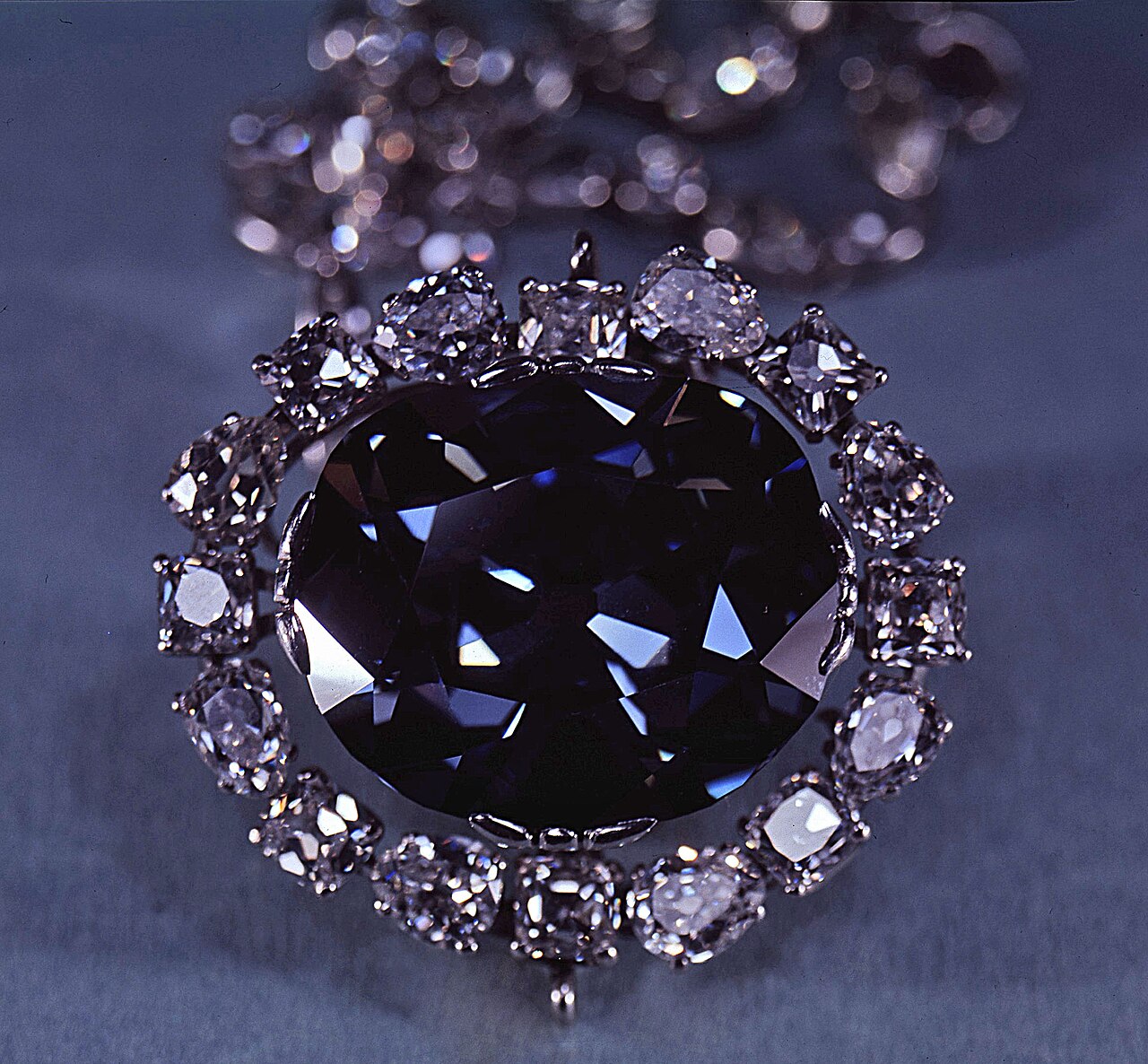
The gemstone is set in a platinum necklace surrounded by colorless diamonds, which visually enhance the depth of its blue color.
The contrast between the Hope Diamond's intense blue and the brilliance of the white diamonds makes the necklace instantly recognizable.
Its display in a public museum gives it a dual significance: it is both a historic treasure and a scientific object accessible to the general public.
How much is the Hope Diamond worth?
It is naturally tempting to assign a financial value to the Hope Diamond.
But how can one estimate the worth of a historic diamond that is not intended for sale and whose provenance is linked to the French Crown Jewels?
Carat weight, clarity, color and cut quality are essential characteristics when determining the value of a gemstone.
In the case of the Hope Diamond, however, these criteria are simply not enough.
Its exceptional rarity, age, royal provenance, importance to gemological research and worldwide reputation must also be taken into account.
As with other world-famous colored diamonds, a purely commercial valuation would reflect only part of its significance.
The spectacular figures sometimes quoted in the press remain hypothetical: the diamond belongs to a museum collection and is not traded on the market, making it impossible to establish a verifiable current selling price.
Why is the Hope Diamond unique in the world?
The Hope Diamond combines an extraordinarily rare set of characteristics.
Its deep grayish-blue color is the result of an exceptional natural chemical phenomenon. Weighing 45.52 carats, it is a remarkable gemstone among natural blue diamonds. Its red phosphorescence gives it a particularly spectacular optical property.
Beyond these gemological qualities lies an almost unparalleled historical journey: the diamond mines of India, the court of Louis XIV, the French Crown Jewels, the robbery of 1792, British collections, American high society and finally the Smithsonian museums.
Perhaps most fascinating of all is how scientific research has helped uncover the diamond's probable origins after centuries of mystery.
The Hope Diamond reminds us that exceptional diamonds are not simply luxury objects. They are also witnesses to history, the trade in precious gemstones and the extraordinary geological processes taking place deep within the Earth.
Combining royal history, legends of a curse and scientific discoveries, the Hope Diamond remains one of the finest examples of the extraordinary relationship between nature, jewelry and human history.


