Jewellery
Elizabeth Taylor’s Engagement Rings: A Lifetime of Love and Diamonds
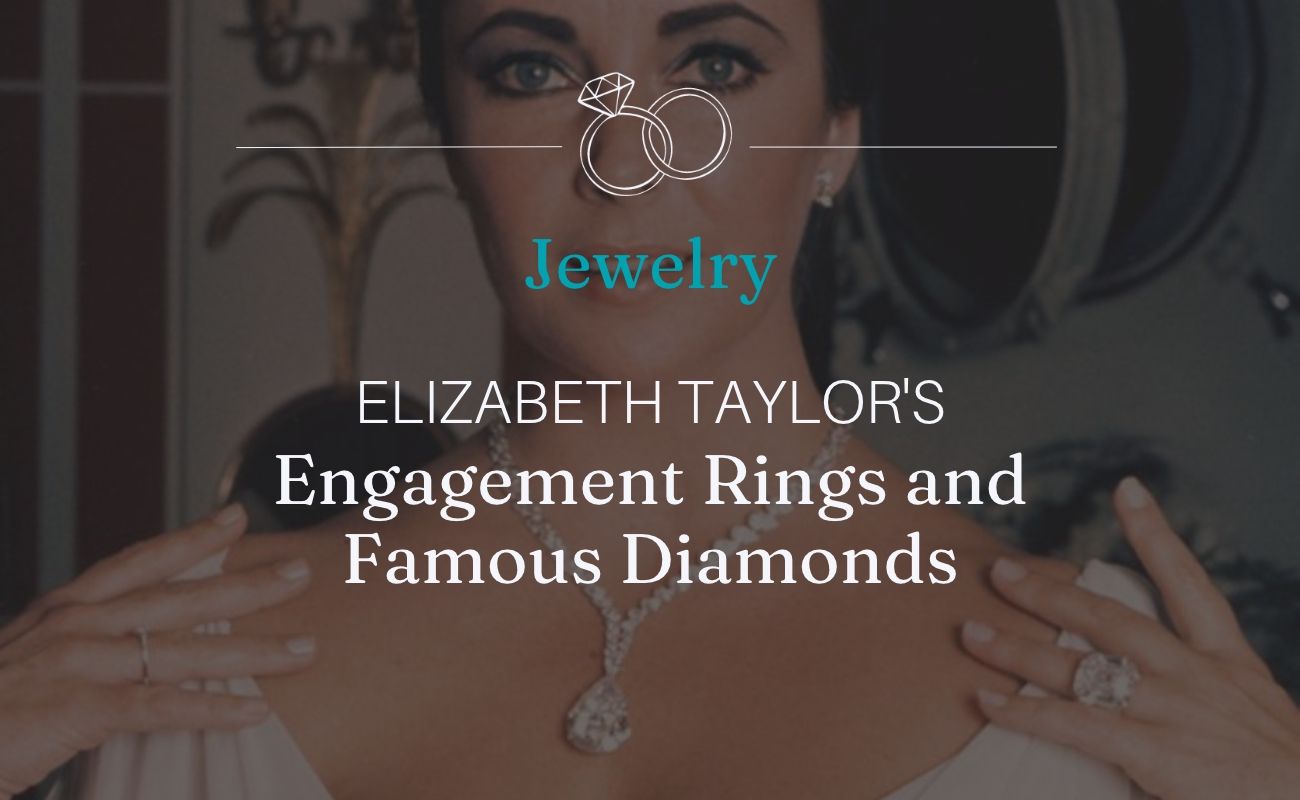
Eight marriages, ten engagements and diamonds that made history. For Elizabeth Taylor, jewellery was never merely a red-carpet accessory. Her jewels accompanied new encounters, promises, great passions and, sometimes, farewells. Here is the story of the rings and gemstones that marked her life, and the question they raise: what makes a piece of jewellery truly unforgettable?
Elizabeth Taylor: ten engagements, but not ten diamond rings
Elizabeth Taylor married eight times, to seven different men: she married Richard Burton twice. The ten engagements generally attributed to her also include relationships that never led to marriage. And despite the image created by her extraordinary jewellery collection, not every proposal came with a spectacular diamond solitaire. Her story features a cushion-cut diamond, sapphires, a bracelet, wedding bands and exceptional gifts presented long after the wedding day.
That is precisely what makes her story so fascinating. Through her jewels, we can trace the changing tastes of a woman who loved gemstones as much for their beauty as for their history. Some pieces held immense sentimental value; others became legends of high jewellery in their own right.
Early promises: diamonds and sapphires
In 1949, Elizabeth Taylor was just 17 when she became engaged to William Pawley Jr. The ring associated with that first promise featured a cushion-cut diamond. The wedding never took place, but the young actress was already developing a taste for gemstones with character.
The following year, she married Conrad “Nicky” Hilton Jr., heir to the hotel dynasty. He gave her a platinum-set diamond weighing approximately four carats. Next came Michael Wilding, whom she married in 1952. This chapter of her life is associated with a ring featuring a cabochon sapphire surrounded by diamonds: a striking contrast between deep blue and white light, far removed from the traditional solitaire.
The future Hollywood icon was discovering that a promise could take many forms. A diamond might express understated elegance, while a coloured gemstone could give a ring a more distinctive personality.
Mike Todd: the nearly 30-carat ring that became a symbol of love
With film producer Mike Todd, the story took on an entirely new scale. In 1956, he presented Elizabeth Taylor with an extraordinary engagement ring featuring an emerald-cut diamond weighing 29 and 7/8 carats — just a fraction under 30 carats. As the actress was still married to Michael Wilding when Todd proposed, she initially described the jewel as a “friendship ring”.
The emerald cut is distinguished by its long step-cut facets and clean geometric lines. Rather than the lively sparkle of a round brilliant cut, it creates broad, architectural flashes of light. In a stone of this size, its visual clarity and proportions become especially impressive.
Elizabeth Taylor and Mike Todd married in February 1957. Their happiness was tragically cut short in March 1958, when Todd died in a plane crash. The actress continued to wear his ring long after his death. The diamond was no longer simply a reminder of a proposal: it had become a lasting symbol of their love.
Mike Todd had also given her jewellery suites, an antique tiara and magnificent ruby-set pieces. Yet among all those treasures, the engagement ring remains one of the most moving reminders of their relationship.
Eddie Fisher: when a bracelet took the place of an engagement ring
When Elizabeth Taylor married singer Eddie Fisher in 1959, she was still wearing the diamond Mike Todd had given her. The jewel chosen to mark this new union was therefore not a ring, but a bracelet set with 50 diamonds.
It is a reminder that engagement jewellery need not follow a prescribed formula. Whether it is a ring, a bracelet, a wedding band or a coloured gemstone, what matters is the meaning the couple gives it. In Taylor’s case, her new bracelet sat alongside treasured memories of an earlier marriage.
Her relationship with Fisher came to an end in the early 1960s. On the set of Cleopatra, she met a Welsh actor who would profoundly shape both her life and the history of diamonds: Richard Burton.
Richard Burton: gifts more famous than the wedding rings
Elizabeth Taylor and Richard Burton first married in 1964, divorced and then married again in 1975. Their marriages were marked by diamond-set wedding bands and exceptional jewels. For their engagement, Burton gave her, among other pieces, a Bulgari jewel featuring an important emerald. Yet it was two diamonds acquired during their marriage that would become truly legendary.
The 33.19-carat Krupp diamond, later renamed the Elizabeth Taylor Diamond
In 1968, Richard Burton acquired the Krupp diamond for her. This 33.19-carat stone, mounted in a platinum ring and flanked by two tapered baguette diamonds, has a cut-cornered step cut often described as an Asscher cut. The Gemological Institute of America (GIA) graded it D colour, the highest grade on the colour scale for colourless diamonds, and VS1 clarity, with the potential to become internally flawless after repolishing.
Elizabeth Taylor wore it so often that the ring became almost inseparable from her image. After her death, the gemstone became known as the Elizabeth Taylor Diamond. In December 2011, Christie’s sold it for US$8,818,500.
Worth noting: despite its fame, the Krupp diamond was not Taylor’s engagement ring from Richard Burton. It was a gift presented four years after their first wedding.
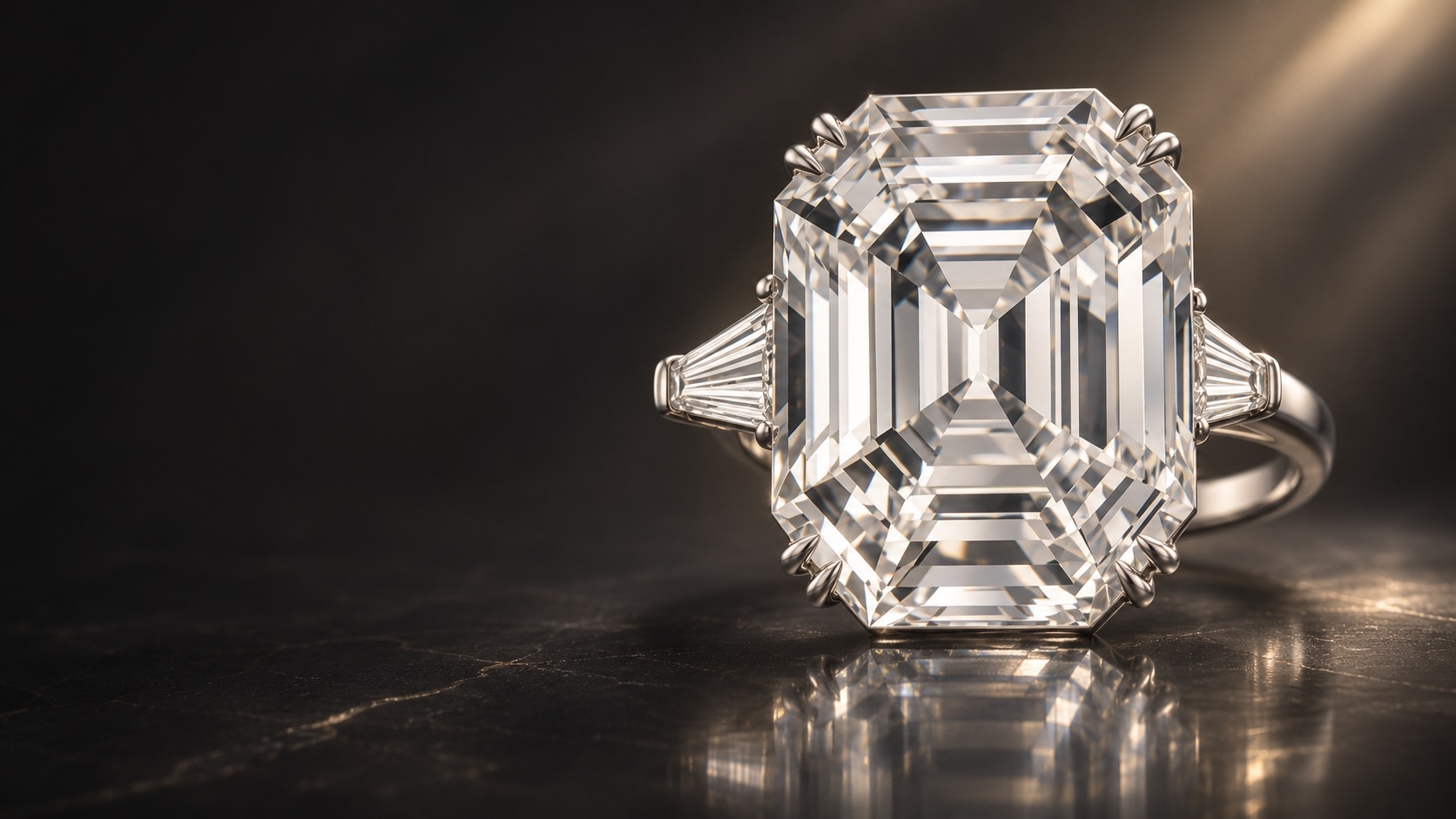
Artistic illustration inspired by the famous 33.19-carat Krupp diamond, given to Elizabeth Taylor in 1968.
The 69.42-carat Taylor-Burton: an extraordinary pear-shaped diamond
One year later, Richard Burton purchased another exceptional gemstone: the Taylor-Burton, a 69.42-carat pear-shaped diamond. The transaction reached US$1.1 million in 1969, an astonishing sum at the time. Elizabeth Taylor first wore the diamond as a ring before having it transformed into a pendant that could be worn on a necklace.
Its story illustrates an essential principle of fine jewellery: an important gemstone does not always find its final form in its first setting. A setting can evolve and a ring can become a pendant without the stone losing its identity. Taylor sold the Taylor-Burton diamond in the late 1970s and devoted part of the proceeds to funding a hospital in Botswana.
The couple also owned historic jewels, including the celebrated La Peregrina pearl. They were not all rings, but together they reveal how Taylor viewed precious stones: as treasures to wear, admire and pass on, rather than simply numbers measured in carats.
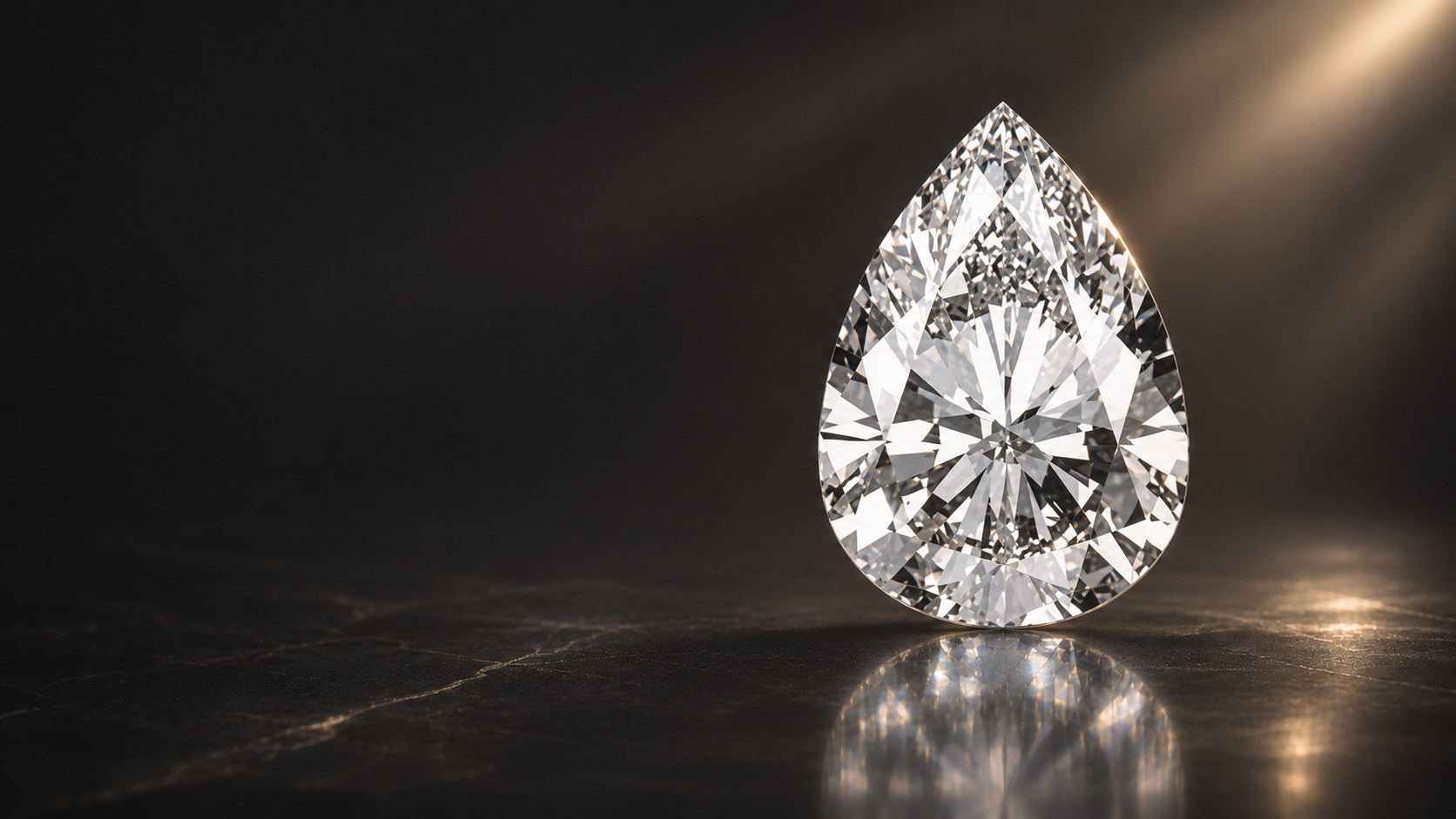
Artistic illustration inspired by the 69.42-carat pear-shaped Taylor-Burton diamond.
Rubies, sapphires and an eternity band: the final chapters
After Richard Burton, Elizabeth Taylor continued to favour jewellery with a strong personality. When she became engaged to John Warner, whom she married in 1976, her ring combined rubies, emeralds and diamonds. Its colourful design was more eclectic than the grand diamond solitaires of her younger years.
In 1983, Mexican lawyer Victor Luna gave her a ring featuring a sapphire of approximately 16 carats, surrounded by diamonds. The couple never married. In late 1984, businessman Dennis Stein also presented her with a ring combining sapphires and diamonds; that engagement, too, was called off.
In 1991, Elizabeth Taylor married Larry Fortensky. For her eighth and final wedding, she chose a diamond-pavé wedding band, far more understated than some of the stones that had made her famous. It was an almost paradoxical final chapter: a woman who had worn some of the world’s most extraordinary diamonds could also appreciate a jewel with a simple, continuous design.
What Elizabeth Taylor's rings can teach us about choosing a diamond
The size and weight of Taylor’s gemstones are the stuff of dreams, yet her collection’s appeal goes far beyond records. Her jewels offer three useful lessons for anyone choosing an engagement ring.
- The cut gives a gemstone its personality. An emerald cut emphasises clean lines and broad flashes of light; a cushion cut offers softer contours; and a pear shape creates an elegant, elongated silhouette. No single shape is universally better: each expresses a different aesthetic.
- Carat weight alone does not determine beauty. Colour, clarity, proportions and cut quality must be considered together. A carefully chosen diamond of more modest weight can display remarkable brilliance.
- A piece of jewellery should reflect the person wearing it. Whether it is a timeless solitaire, a diamond halo, a coloured gemstone or a pavé band, the right ring is not necessarily the largest. It is the one its wearer will love for years to come.
At i-diamants, choosing a ring starts with selecting a certified natural diamond and a setting suited to individual tastes. Diamond solitaire rings remain a wonderful starting point for those seeking enduring elegance, far removed from the pursuit of record-breaking carat weights.
Frequently asked questions about Elizabeth Taylor's rings
How many times was Elizabeth Taylor married?
She married eight times, to seven different men. She married Richard Burton twice, first in 1964 and again in 1975.
What was her most famous diamond ring?
The ring featuring the 33.19-carat Krupp diamond, later renamed the Elizabeth Taylor Diamond, remains one of the most famous. Given to her by Richard Burton in 1968, it sold for US$8,818,500 at Christie’s in 2011.
Was the Taylor-Burton diamond an engagement ring?
No. This 69.42-carat pear-shaped diamond was a gift acquired in 1969, several years after the couple’s first wedding. Elizabeth Taylor wore it first as a ring and later as a necklace.
What engagement ring did Mike Todd give her?
He gave her a ring set with an emerald-cut diamond weighing 29 and 7/8 carats. It became one of her most treasured keepsakes after the producer’s death in 1958.
Legendary diamonds, deeply human stories
From her first cushion-cut diamond ring to the pavé band of her final marriage, Elizabeth Taylor embraced changing styles and eras without ever losing her passion for jewellery. Her most famous stones impress us with their extraordinary size; her most touching jewels remind us that a diamond can be, above all, the witness to a moment in someone’s life.
Perhaps that is where the true luxury of an engagement ring lies: in the beauty of a stone chosen for one particular person, and in the memories it will carry.


